Cucina umbra antica
Una cucina di distanza, silenzio e resistenza: ricette, prodotti contadini e cultura materiale dell’Umbria interna, rilette con uno sguardo tecnico contemporaneo e personale.
Ancient Umbrian cuisine
A cuisine of distance, silence and resilience: recipes, rural ingredients and material culture from inland Umbria, read through a contemporary and personal technical eye.
Alte umbrische Küche
Eine Küche der Distanz, der Stille und der Widerstandskraft: Rezepte, bäuerliche Produkte und materielle Kultur aus dem inneren Umbrien, zeitgenössisch und persönlich technisch gelesen.
Una cucina di distanza, silenzio e resistenza.
L’Umbria non ha una cucina nata dall’abbondanza o dal desiderio di stupire. La sua cucina più antica nasce da una terra interna, agricola, collinare e in parte montana, senza mare, attraversata nei secoli da confini mobili, influenze vicine e culture contadine diverse.
Tra Perugia, la Valnerina, Cascia, Norcia, il Trasimeno, l’Alta Valle del Tevere, lo Spoletino, l’Orvietano e i paesi dell’Appennino, il cibo è stato per lungo tempo una questione di necessità, stagione, conservazione e lavoro quotidiano.
Pane, legumi, cereali, erbe spontanee, olio, maiale, pecora, selvaggina, formaggi, tartufi, funghi e prodotti conservati formano la grammatica essenziale di questa cucina.
A cuisine of distance, silence and resilience.
Umbrian cooking was not born from abundance or spectacle. Its oldest forms come from an inland, agricultural, hilly and partly mountainous land, without a coastline, shaped by shifting borders and neighbouring cultures.
Between Perugia, Valnerina, Cascia, Norcia, Lake Trasimeno, the Upper Tiber Valley, Spoleto, Orvieto and the Apennine villages, food was long a matter of necessity, season, preservation and daily work.
Bread, legumes, grains, wild herbs, olive oil, pork, sheep, game, cheese, truffles, mushrooms and preserved foods form its essential grammar.
Eine Küche der Distanz, Stille und Widerstandskraft.
Die umbrische Küche entstand nicht aus Überfluss oder Spektakel. Ihre ältesten Formen kommen aus einem inneren, landwirtschaftlichen, hügeligen und teils bergigen Land ohne Meer, geprägt von beweglichen Grenzen und Nachbarkulturen.
Zwischen Perugia, Valnerina, Cascia, Norcia, Trasimenischem See, Oberem Tibertal, Spoleto, Orvieto und den Apennindörfern war Essen lange eine Frage von Notwendigkeit, Saison, Konservierung und täglicher Arbeit.
Brot, Hülsenfrüchte, Getreide, Wildkräuter, Olivenöl, Schwein, Schaf, Wild, Käse, Trüffel, Pilze und Konserven bilden ihre wesentliche Grammatik.
Non è nostalgia. È metodo.
Rileggere la cucina umbra antica oggi non significa rifare il passato in modo folcloristico. Significa capire perché certe tecniche esistevano: conservare, nutrire, usare il fuoco, valorizzare tagli poveri, legumi, cereali e grassi buoni.
Essenziale non significa ingenuo. I mezzi erano spesso limitati; il sapere domestico, agricolo e artigianale era invece profondo. Una torta al testo, una zuppa di legumi, una pasta d’acqua e farina o un sugo d’oca raccontano economia familiare, calendario agricolo, rito religioso e uso integrale dell’animale.
Not nostalgia. Method.
Reading ancient Umbrian cuisine today does not mean recreating the past as folklore. It means understanding why certain techniques existed: preserving, nourishing, using fire, valuing humble cuts, legumes, grains and good fats.
Essential does not mean naive. Means were often limited; domestic, agricultural and craft knowledge was deep. A torta al testo, a legume soup, flour-and-water pasta or goose ragu can describe family economy, farming calendar, religious ritual and whole-animal use.
Keine Nostalgie. Methode.
Alte umbrische Küche heute neu zu lesen bedeutet nicht, Vergangenheit folkloristisch nachzustellen. Es bedeutet zu verstehen, warum Techniken existierten: konservieren, nähren, Feuer nutzen, einfache Stücke, Hülsenfrüchte, Getreide und gute Fette wertschätzen.
Wesentlich bedeutet nicht naiv. Die Mittel waren oft begrenzt; das häusliche, landwirtschaftliche und handwerkliche Wissen war tief. Eine Torta al testo, eine Hülsenfrüchtesuppe, Pasta aus Wasser und Mehl oder ein Gänseragu erzählen von Familienökonomie, landwirtschaftlichem Kalender, religiösem Ritual und vollständiger Nutzung des Tieres.
Il pensiero nelle mani.
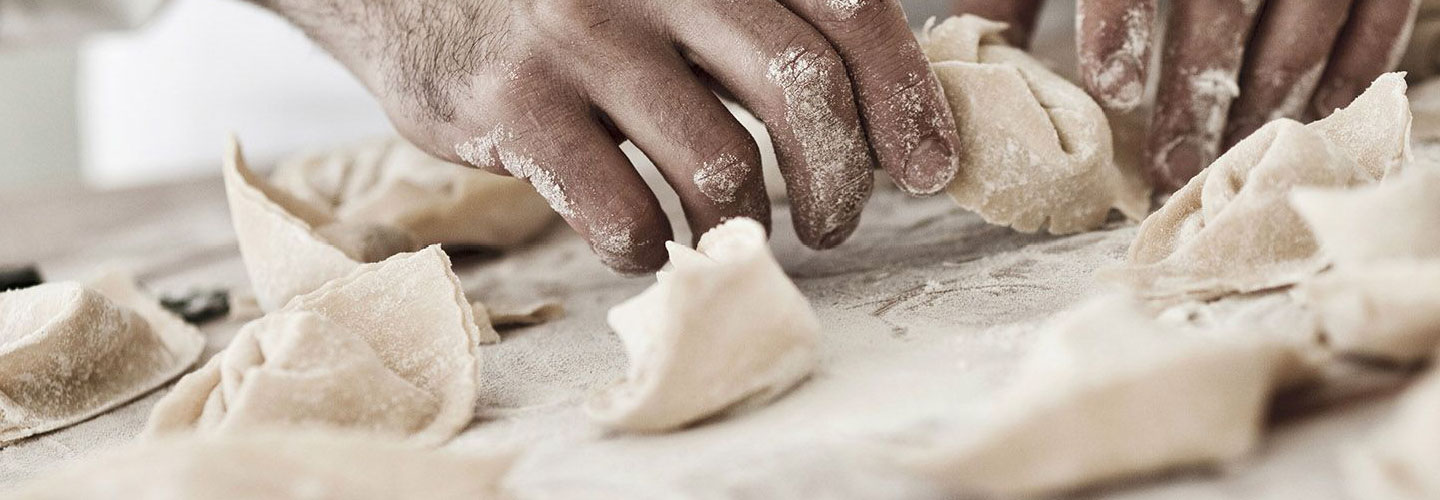
In Umbria il sapere non è sempre passato attraverso grandi discorsi. Spesso è passato attraverso le mani: nel pane cotto sul testo, nel taglio del maiale, nella cura delle stagionature, nella ceramica di Deruta, nel fuoco, nella ripetizione dei gesti.
È un’intelligenza tecnica: concreta, silenziosa, non separa la mente dalla materia. Un sapere che misura, tocca, corregge, aspetta. Se sbagli temperatura, taglio, smalto, impasto o tempo, il risultato lo vedi subito.
Sono nato in questa regione. Non la racconto come cartolina né come appartenenza facile. La rileggo come una radice critica: un modo di osservare il lavoro, la cucina e la consulenza attraverso precisione, silenzio operativo e attenzione alla materia.
Thinking through the hands.
In Umbria, knowledge has not always travelled through big speeches. Often it moved through the hands: bread cooked on a testo, pork cutting, curing, Deruta ceramics, fire, repeated gestures.
This is technical intelligence: concrete, silent, refusing to separate mind from matter. It measures, touches, corrects and waits. If temperature, cut, glaze, dough or time are wrong, the result appears immediately.
I was born in this region. I do not read it as a postcard or as easy belonging. I read it as a critical root: a way of approaching food, work and consulting through precision, operational silence and attention to matter.
Denken durch die Hände.
In Umbrien wurde Wissen nicht immer durch große Reden weitergegeben. Oft ging es durch die Hände: Brot auf dem Testo, Schweineschnitt, Reifung, Keramik aus Deruta, Feuer, wiederholte Gesten.
Das ist technische Intelligenz: konkret, still, ohne Geist und Materie zu trennen. Sie misst, berührt, korrigiert und wartet. Wenn Temperatur, Schnitt, Glasur, Teig oder Zeit falsch sind, sieht man das Ergebnis sofort.
Ich wurde in dieser Region geboren. Ich erzähle sie nicht als Postkarte und nicht als einfache Zugehörigkeit. Ich lese sie als kritische Wurzel: als Arbeitsweise in Küche und Beratung, geprägt von Präzision, operativer Stille und Aufmerksamkeit für Material.
Fatti, suggestioni, interpretazioni.
Alcune tracce storiche vanno usate con precisione. Nortia è una suggestione colta legata a destino e fortuna; Norcia è storicamente attestata come Nursia. La Scuola chirurgica preciana è un capitolo reale del sapere empirico della Valnerina, ma non va ridotta alla frase comoda “i norcini inventarono la chirurgia”.
Allo stesso modo, il simbolismo dell’oca e i riferimenti comparativi al cibo rituale vanno trattati come lettura culturale, non come prova assoluta della cucina umbra. L’obiettivo qui non è costruire un museo immobile, ma leggere ricette, gesti e ingredienti come cultura materiale.
Facts, suggestions, interpretations.
Some historical traces need careful wording. Nortia is a cultured suggestion connected with destiny and fortune; Norcia is historically attested as Nursia. The surgical school of Preci is a real chapter in Valnerina’s empirical knowledge, but it should not be reduced to “pork butchers invented surgery”.
Similarly, the symbolism of goose and comparative references to ritual food should be treated as cultural reading, not as absolute proof of Umbrian cooking. The goal here is not a fixed museum, but a reading of recipes, gestures and ingredients as material culture.
Fakten, Spuren, Deutungen.
Einige historische Spuren brauchen präzise Formulierungen. Nortia ist eine gelehrte Anspielung auf Schicksal und Glück; Norcia ist historisch als Nursia belegt. Die chirurgische Schule von Preci ist ein reales Kapitel des empirischen Wissens der Valnerina, darf aber nicht auf “Metzger erfanden Chirurgie” reduziert werden.
Auch die Symbolik der Gans und vergleichende Hinweise auf rituelles Essen bleiben kulturelle Lesarten, keine absoluten Beweise der umbrischen Küche. Ziel ist kein starres Museum, sondern eine Lektüre von Rezepten, Gesten und Zutaten als materielle Kultur.
Il sistema della cucina umbra.
The system of Umbrian cooking.
Das System der umbrischen Küche.
- Pani e focacce
Torta al testo, crescia, ciaccia: farine di grano tenero, mais o farro, fuoco diretto e uso domestico quotidiano.Breads and flatbreads
Torta al testo, crescia, ciaccia: wheat, corn or spelt flours, direct heat and everyday domestic use.Brote und Fladen
Torta al testo, Crescia, Ciaccia: Weizen-, Mais- oder Dinkel-/Emmermehl, direkte Hitze und Hausgebrauch. - Norcineria
Il maiale come cultura tecnica: salatura, stagionatura, tagli, grasso e conservazione. Per il Prosciutto di Norcia IGP: Norcia, Preci, Cascia, Monteleone di Spoleto e Poggiodomo.Norcineria
Pork as technical culture: salting, curing, cuts, fat and preservation. Prosciutto di Norcia PGI belongs to a defined mountain area in Valnerina.Norcineria
Schwein als technische Kultur: Salzen, Reifen, Zuschnitte, Fett und Konservierung. Prosciutto di Norcia g.g.A. gehört zu einem definierten Berggebiet der Valnerina. - Legumi
Lenticchia di Castelluccio di Norcia IGP, ceci, fave e Fagiolina del Trasimeno: cucina povera, nutriente e modernissima.Legumes
Castelluccio di Norcia lentils PGI, chickpeas, fava beans and Trasimeno bean: humble, nourishing and very contemporary.Hülsenfrüchte
Linsen von Castelluccio di Norcia g.g.A., Kichererbsen, Favabohnen und Fagiolina del Trasimeno: einfach, nahrhaft, modern. - Paste senza uova
Umbricelli, stringozzi, ciriole: acqua, farina di grano tenero, mano, tempo e condimenti essenziali.Eggless pasta
Umbricelli, stringozzi, ciriole: water, soft wheat flour, handwork, time and essential sauces.Pasta ohne Ei
Umbricelli, Stringozzi, Ciriole: Wasser, Weichweizenmehl, Handarbeit, Zeit und einfache Saucen. - Arrosti e fuoco
Spiedo, forno a legna, pillotto, bagnature, erbe aromatiche e gestione del calore.Roasts and fire
Spit, wood oven, basting, herbs and heat management.Braten und Feuer
Spieß, Holzofen, regelmäßiges Begießen, Kräuter und Hitzeverwaltung. - Dolci di calendario
Torcolo, ciaramicola, crespelle, gonfioline: dolci semplici, spesso legati a feste, stagioni e cucina di casa.Calendar desserts
Torcolo, ciaramicola, crespelle, gonfioline: simple sweets linked to feasts, seasons and home cooking.Festtagsgebäck
Torcolo, Ciaramicola, Crespelle, Gonfioline: einfache Süßspeisen, verbunden mit Festen, Jahreszeiten und Hausküche.
Versioni chiare, testabili e tecnicamente più solide.
La cucina antica non va imbalsamata. Va capita, pulita dagli errori inutili e resa di nuovo cucinabile.
Le ricette si aprono cliccando. Dove utile, gli ingredienti sono specificati con un riferimento umbro: DOP, IGP, area storica o prodotto coerente con il territorio.
Clear, testable and technically stronger versions.
Ancient cooking should not be embalmed. It should be understood, cleaned of useless mistakes and made cookable again.
Open each recipe by clicking. Where useful, ingredients include an Umbrian reference: PDO, PGI, historical area or coherent regional product.
Klare, testbare und technisch stärkere Versionen.
Alte Küche sollte nicht einbalsamiert werden. Man muss sie verstehen, von unnötigen Fehlern reinigen und wieder kochbar machen.
Jedes Rezept öffnet sich per Klick. Wo sinnvoll, werden Zutaten mit umbrischem Bezug genannt: g.U., g.g.A., historische Gegend oder passendes Regionalprodukt.
Torta al testo di granturcoCorn torta al testoTorta al testo mit Maismehlpane / bread
Ingredienti
- 200 g farina di mais fine, meglio da mais locale o macinata a pietra
- 50 g farina di grano tenero tipo 0 umbra
- 125–140 ml acqua bollente
- 1 uovo
- 6 g lievito istantaneo per salati
- sale q.b.
- pecorino umbro o pecorino della Valnerina grattugiato, facoltativo
Procedimento
- Mescola farina di mais, farina 0, sale e lievito.
- Versa l’acqua bollente poco alla volta e lavora con cucchiaio o spatola.
- Quando il composto è tiepido, aggiungi l’uovo e il pecorino.
- Impasta fino a ottenere una massa soda ma non secca. Riposa 15 minuti.
- Stendi a 8–10 mm e cuoci su testo o piastra di ghisa calda 6–8 minuti per lato.
Nota tecnica: l’acqua bollente idrata meglio il mais e rende l’impasto meno friabile. La torta al testo cambia nome e gesto: crescia, ciaccia, panaro, brace o ghisa.
Ingredients
- 200 g fine corn flour, preferably stone-ground
- 50 g Umbrian soft wheat flour, type 0
- 125–140 ml boiling water
- 1 egg
- 6 g instant savoury baking powder
- salt
- Umbrian pecorino, optional
Method
- Mix corn flour, wheat flour, salt and baking powder.
- Add boiling water gradually and mix.
- When warm, add egg and pecorino.
- Knead into a firm but not dry dough. Rest 15 minutes.
- Roll to 8–10 mm and cook on a hot cast-iron plate for 6–8 minutes per side.
Technical note: boiling water hydrates corn better and reduces crumbling. This flatbread changes name and gesture across Umbria.
Zutaten
- 200 g feines Maismehl, möglichst steingemahlen
- 50 g umbrisches Weichweizenmehl Type 0
- 125–140 ml kochendes Wasser
- 1 Ei
- 6 g Backpulver für herzhafte Teige
- Salz
- umbrischer Pecorino optional
Zubereitung
- Maismehl, Weizenmehl, Salz und Backpulver mischen.
- Kochendes Wasser nach und nach einarbeiten.
- Lauwarm Ei und Pecorino zugeben.
- Zu einem festen, nicht trockenen Teig kneten. 15 Minuten ruhen lassen.
- 8–10 mm dick ausrollen und auf heißer Gusseisenplatte 6–8 Minuten pro Seite backen.
Technische Notiz: Kochendes Wasser hydratisiert Maismehl besser. Der Fladen wechselt in Umbrien Namen und Geste.
Prosciutto “fritto” all’agrestoQuick-fried ham with agrestoKurz gebratener Schinken mit Agrestonorcineria
Ingredienti
- 4 fette spesse di prosciutto umbro non troppo stagionato; se possibile Prosciutto di Norcia IGP
- 4 foglie di salvia
- 50 ml mosto o succo d’uva non zuccherato
- 50 ml aceto di vino bianco
- pepe nero, cannella minima
Procedimento
- Taglia il prosciutto in pezzi larghi o strisce spesse.
- Scalda una padella senza aggiungere troppo grasso.
- Rosola il prosciutto pochi secondi per lato con la salvia.
- Aggiungi mosto e aceto, lascia evaporare rapidamente.
- Completa con pepe e una traccia di cannella. Servi tiepido.
Nota tecnica: il prosciutto non deve diventare duro. La componente acida pulisce il grasso e lo riporta in equilibrio.
Ingredients
- 4 thick slices of not-too-dry Umbrian cured ham; Prosciutto di Norcia PGI if available
- 4 sage leaves
- 50 ml grape must or unsweetened grape juice
- 50 ml white wine vinegar
- black pepper, a very small touch of cinnamon
Method
- Cut ham into wide pieces or thick strips.
- Heat a pan without adding much fat.
- Sear briefly on both sides with sage.
- Add must and vinegar; let evaporate quickly.
- Finish with pepper and a hint of cinnamon. Serve warm.
Technical note: the ham must not become hard. Acidity balances and cleans the fat.
Zutaten
- 4 dicke Scheiben umbrischer, nicht zu stark gereifter Schinken; wenn möglich Prosciutto di Norcia g.g.A.
- 4 Salbeiblätter
- 50 ml Traubenmost oder ungesüßter Traubensaft
- 50 ml Weißweinessig
- schwarzer Pfeffer, sehr wenig Zimt
Zubereitung
- Schinken in breite Stücke oder Streifen schneiden.
- Pfanne ohne viel Fett erhitzen.
- Mit Salbei kurz von beiden Seiten anbraten.
- Most und Essig zugeben und schnell einkochen.
- Mit Pfeffer und einer Spur Zimt servieren.
Technische Notiz: Der Schinken darf nicht hart werden. Säure gleicht das Fett aus.
Frittata con asparagi di boscoWild asparagus frittataFrittata mit Wildspargelerbe / herbs
Ingredienti
- 4 uova
- 100–120 g asparagi selvatici o asparagi sottili
- olio extravergine d’oliva DOP Umbria, preferibilmente Colli Assisi-Spoleto o Colli Martani
- sale, pepe
- pecorino umbro grattugiato facoltativo
Procedimento
- Pulisci gli asparagi eliminando la parte dura.
- Saltali in padella con poco olio e sale per 3–4 minuti.
- Sbatti le uova senza montarle troppo; aggiungi pepe e, se vuoi, pecorino.
- Versa le uova sugli asparagi e cuoci a fuoco medio-basso.
- Lascia la frittata leggermente morbida al centro oppure girala per una cottura più asciutta.
Nota tecnica: l’uovo non va stracotto. La frittata deve restare tenera, non spugnosa.
Ingredients
- 4 eggs
- 100–120 g wild or thin asparagus
- Umbrian PDO extra virgin olive oil
- salt, pepper
- grated Umbrian pecorino, optional
Method
- Clean asparagus and remove tough ends.
- Saute with a little oil and salt for 3–4 minutes.
- Beat eggs lightly; add pepper and pecorino if desired.
- Pour over asparagus and cook on medium-low heat.
- Keep the centre slightly soft or turn for a drier finish.
Technical note: do not overcook eggs. A good frittata stays tender, not spongy.
Zutaten
- 4 Eier
- 100–120 g Wildspargel oder dünner Spargel
- umbrisches Olivenöl extra vergine g.U.
- Salz, Pfeffer
- geriebener umbrischer Pecorino optional
Zubereitung
- Spargel putzen und harte Enden entfernen.
- Mit wenig Öl und Salz 3–4 Minuten braten.
- Eier leicht schlagen; Pfeffer und optional Pecorino zugeben.
- Über den Spargel gießen und bei mittlerer bis niedriger Hitze garen.
- Die Mitte weich lassen oder wenden.
Technische Notiz: Eier nicht übergaren. Eine gute Frittata bleibt zart.
Crema di funghi all’aglioGarlic mushroom creamPilzcreme mit Knoblauchbosco / forest
Ingredienti
- 250 g funghi puliti, anche gambi; porcini umbri se disponibili, altrimenti misto bosco
- 1 piccola cipolla
- 1 spicchio d’aglio
- 30 g burro
- 30 g olio extravergine d’oliva DOP Umbria
- prezzemolo, sale, pepe
Procedimento
- Trita cipolla, aglio e funghi.
- Scalda olio e burro, aggiungi cipolla e aglio senza farli bruciare.
- Unisci i funghi e cuoci finché perdono l’acqua.
- Prosegui fino a ottenere una crema asciutta ma morbida.
- Aggiusta di sale, pepe e prezzemolo.
Nota tecnica: prima i funghi rilasciano acqua, poi concentrano sapore. Non fermarti troppo presto.
Ingredients
- 250 g cleaned mushrooms, stems included; porcini if available
- 1 small onion
- 1 garlic clove
- 30 g butter
- 30 g Umbrian PDO extra virgin olive oil
- parsley, salt, pepper
Method
- Chop onion, garlic and mushrooms.
- Heat oil and butter; cook onion and garlic gently.
- Add mushrooms and cook until they release their water.
- Continue until creamy and moist but not watery.
- Season with salt, pepper and parsley.
Technical note: mushrooms first release water, then concentrate flavour. Do not stop too early.
Zutaten
- 250 g geputzte Pilze, auch Stiele; Steinpilze wenn verfügbar
- 1 kleine Zwiebel
- 1 Knoblauchzehe
- 30 g Butter
- 30 g umbrisches Olivenöl extra vergine g.U.
- Petersilie, Salz, Pfeffer
Zubereitung
- Zwiebel, Knoblauch und Pilze fein hacken.
- Öl und Butter erhitzen; Zwiebel und Knoblauch sanft garen.
- Pilze zugeben und kochen, bis sie Wasser abgeben.
- Weitergaren, bis eine weiche Creme entsteht.
- Mit Salz, Pfeffer und Petersilie abschmecken.
Technische Notiz: Pilze geben erst Wasser ab und konzentrieren danach Geschmack.
Purè di fave secche all’anticaOld-style dried fava bean pureeAltes Püree aus getrockneten Favabohnenlegumi
Ingredienti
- 500 g fave secche decorticate
- 2 cipolle bianche o dorate
- 2 mele renette o mele acidule
- salvia
- olio extravergine d’oliva DOP Umbria
- sale, pepe
Procedimento
- Ammolla le fave 8–12 ore se non sono decorticate molto fini.
- Cuocile dolcemente in acqua pulita con poca salvia fino a sfaldarle.
- Frulla o lavora con cucchiaio fino a ottenere un purè.
- A parte rosola cipolle a fette con olio e salvia.
- Aggiungi mele a rondelle e cuoci finché diventano morbide ma non disfatte.
- Servi il purè con cipolle, mele e olio crudo.
Nota antropologica: fave, morti e calendario popolare si incrociano spesso nel Mediterraneo. Qui restano soprattutto cucina di dispensa e nutrimento.
Ingredients
- 500 g dried split fava beans
- 2 white or yellow onions
- 2 tart apples
- sage
- Umbrian PDO extra virgin olive oil
- salt, pepper
Method
- Soak beans 8–12 hours if not finely split.
- Cook gently with sage until soft.
- Blend or beat into a puree.
- Cook sliced onions with oil and sage.
- Add apple slices and cook until soft but still shaped.
- Serve with onions, apples and raw oil.
Anthropological note: fava beans, death and folk calendars often meet in Mediterranean culture. Here they remain pantry food and nourishment.
Zutaten
- 500 g getrocknete geschälte Favabohnen
- 2 weiße oder gelbe Zwiebeln
- 2 säuerliche Äpfel
- Salbei
- umbrisches Olivenöl extra vergine g.U.
- Salz, Pfeffer
Zubereitung
- Bohnen 8–12 Stunden einweichen, wenn nötig.
- Sanft mit Salbei weich kochen.
- Zu einem Püree verarbeiten.
- Zwiebeln in Öl mit Salbei langsam braten.
- Apfelscheiben zugeben und weich garen.
- Mit rohem Öl servieren.
Anthropologische Notiz: Favabohnen, Tod und Volkskalender kreuzen sich oft im Mittelmeerraum.
Insalata di cipolle sotto la braceEmber-roasted onion saladZwiebeln aus der Glut als Salatbrace / fire
Ingredienti
- 4 cipolle dolci grandi, possibilmente da orto locale
- olio extravergine d’oliva DOP Umbria
- aceto di vino
- sale
- spezie fini o pepe
Procedimento
- Avvolgi le cipolle intere in carta forno e alluminio.
- Cuoci sotto la brace per circa 1 ora oppure in forno a 230–250°C finché morbide.
- Lascia intiepidire, elimina la pelle esterna bruciata.
- Taglia a falde e condisci con olio, aceto, sale e spezie.
- Servi tiepide o a temperatura ambiente.
Nota tecnica: la cipolla deve cuocere intera per concentrare dolcezza e umidità.
Ingredients
- 4 large sweet onions
- Umbrian PDO extra virgin olive oil
- wine vinegar
- salt
- fine spice mix or pepper
Method
- Wrap whole onions in parchment and foil.
- Cook in embers for about 1 hour or in a 230–250°C oven until soft.
- Cool slightly and remove burnt outer skin.
- Cut into petals and season with oil, vinegar, salt and spices.
- Serve warm or at room temperature.
Technical note: cooking whole onions concentrates sweetness and moisture.
Zutaten
- 4 große süße Zwiebeln
- umbrisches Olivenöl extra vergine g.U.
- Weinessig
- Salz
- feine Gewürzmischung oder Pfeffer
Zubereitung
- Ganze Zwiebeln in Backpapier und Folie wickeln.
- Etwa 1 Stunde in der Glut oder bei 230–250°C im Ofen weich garen.
- Etwas abkühlen lassen und Außenhaut entfernen.
- In Stücke teilen und mit Öl, Essig, Salz und Gewürzen anmachen.
- Lauwarm oder bei Raumtemperatur servieren.
Technische Notiz: Ganze Zwiebeln bewahren Feuchtigkeit und konzentrieren Süße.
Spezie fini medievaliMedieval fine spice mixMittelalterliche feine Gewürzemix
Ingredienti
- 16 g pepe nero
- 16 g cannella
- 16 g zenzero secco
- 4 g zafferano, preferibilmente umbro quando disponibile
- 2 g chiodi di garofano
Procedimento
- Pesta le spezie in mortaio oppure macinale finemente.
- Setaccia per ottenere una polvere uniforme.
- Conserva in barattolo piccolo, asciutto e al buio.
- Usane pochissimo: deve profumare, non coprire.
Nota tecnica: è un mix intenso. In cucina moderna va dosato con più prudenza rispetto ai testi antichi.
Ingredients
- 16 g black pepper
- 16 g cinnamon
- 16 g dried ginger
- 4 g saffron, Umbrian if available
- 2 g cloves
Method
- Pound or grind spices finely.
- Sieve for an even powder.
- Store dry, dark and sealed.
- Use very little: it should perfume, not dominate.
Technical note: this mix is intense. In modern cooking it should be used more carefully than in ancient texts.
Zutaten
- 16 g schwarzer Pfeffer
- 16 g Zimt
- 16 g getrockneter Ingwer
- 4 g Safran, wenn möglich aus Umbrien
- 2 g Nelken
Zubereitung
- Gewürze fein mörsern oder mahlen.
- Durchsieben.
- Trocken, dunkel und gut verschlossen lagern.
- Sehr sparsam verwenden.
Technische Notiz: Diese Mischung ist intensiv. In moderner Küche vorsichtig dosieren.
Zuppa di lenticchie di CastelluccioCastelluccio lentil soupLinsensuppe mit Castelluccio-Linsenlegumi
Ingredienti
- 300 g Lenticchia di Castelluccio di Norcia IGP; in alternativa lenticchie piccole di montagna
- 1 carota, 1 costa di sedano, 1 cipolla
- 1 spicchio d’aglio
- salvia o rosmarino
- 100 g pancetta umbra facoltativa
- 150 g pomodoro pelato o passata leggera
- olio extravergine d’oliva DOP Umbria, sale, pepe
Procedimento
- Sciacqua le lenticchie e controlla eventuali impurità.
- Fai un soffritto leggero con odori, aglio ed erbe.
- Aggiungi pancetta se la usi, poi pomodoro.
- Unisci lenticchie e acqua calda o brodo leggero.
- Cuoci dolcemente finché tenere, senza spappolarle.
- Riposa 10 minuti e finisci con olio crudo.
Nota tecnica: le lenticchie piccole non richiedono ammollo e vanno controllate spesso per non superare la cottura.
Ingredients
- 300 g Castelluccio di Norcia lentils PGI, or small mountain lentils
- 1 carrot, 1 celery stalk, 1 onion
- 1 garlic clove
- sage or rosemary
- 100 g Umbrian pancetta, optional
- 150 g peeled tomatoes or light passata
- Umbrian PDO extra virgin olive oil, salt, pepper
Method
- Rinse lentils and check for impurities.
- Make a light base with vegetables, garlic and herbs.
- Add pancetta if using, then tomato.
- Add lentils and hot water or light stock.
- Simmer gently until tender but not broken.
- Rest 10 minutes and finish with raw olive oil.
Technical note: small lentils need no soaking and should be checked often.
Zutaten
- 300 g Linsen von Castelluccio di Norcia g.g.A. oder kleine Berglinsen
- 1 Karotte, 1 Selleriestange, 1 Zwiebel
- 1 Knoblauchzehe
- Salbei oder Rosmarin
- 100 g umbrische Pancetta optional
- 150 g Tomaten oder leichte Passata
- umbrisches Olivenöl extra vergine g.U., Salz, Pfeffer
Zubereitung
- Linsen spülen und kontrollieren.
- Gemüse, Knoblauch und Kräuter sanft anschwitzen.
- Optional Pancetta zugeben, dann Tomate.
- Linsen und heißes Wasser oder leichten Fond zugeben.
- Sanft kochen, bis sie weich sind, aber nicht zerfallen.
- 10 Minuten ruhen lassen und mit rohem Öl abschließen.
Technische Notiz: Kleine Linsen brauchen kein Einweichen und sollten nicht überkocht werden.
Fagiolina del TrasimenoTrasimeno beanFagiolina del Trasimenotrasimeno
Ingredienti
- 250 g Fagiolina del Trasimeno, Presidio Slow Food se disponibile
- mezza cipolla
- salvia
- olio extravergine d’oliva DOP Umbria, sottozona Colli del Trasimeno quando possibile
- sale
Procedimento
- Sciacqua velocemente la fagiolina.
- Cuoci partendo da acqua fredda con cipolla e salvia.
- Tieni il bollore molto leggero.
- Sala verso fine cottura.
- Servi in brodo leggero oppure scolata con olio crudo.
Nota tecnica: non richiede ammollo. La cottura deve rispettare la dimensione minuta del legume. “Risina” può comparire come nome storico, ma il titolo corretto resta Fagiolina del Trasimeno.
Ingredients
- 250 g Trasimeno bean, Slow Food Presidium if available
- half an onion
- sage
- Umbrian PDO extra virgin olive oil, Trasimeno subzone if possible
- salt
Method
- Rinse quickly.
- Start cooking in cold water with onion and sage.
- Keep the simmer very gentle.
- Salt near the end.
- Serve in light broth or drained with raw olive oil.
Technical note: no soaking is needed. “Risina” may appear as an old name, but the correct main name is Fagiolina del Trasimeno.
Zutaten
- 250 g Fagiolina del Trasimeno, Slow-Food-Presidium wenn verfügbar
- eine halbe Zwiebel
- Salbei
- umbrisches Olivenöl extra vergine g.U., Subzone Trasimeno wenn möglich
- Salz
Zubereitung
- Kurz spülen.
- In kaltem Wasser mit Zwiebel und Salbei aufsetzen.
- Sehr sanft köcheln lassen.
- Erst gegen Ende salzen.
- In leichter Brühe oder abgetropft mit rohem Olivenöl servieren.
Technische Notiz: Kein Einweichen nötig. “Risina” kann als alter Name vorkommen, Hauptname bleibt Fagiolina del Trasimeno.
Zuppa di castagne e ceciChestnut and chickpea soupSuppe mit Kastanien und Kichererbseninverno
Ingredienti
- 250 g ceci secchi, meglio da coltivazione umbra o appenninica
- 250 g castagne arrostite e pelate, meglio da area appenninica umbra
- 1 cipolla, 1 carota, 1 costa di sedano
- lardo umbro o olio extravergine d’oliva DOP Umbria
- 100 g pomodoro
- brodo leggero o acqua
- pane umbro tostato e agliato
Procedimento
- Ammolla i ceci 18–24 ore e cuocili finché teneri.
- Prepara una base con odori e lardo oppure olio.
- Aggiungi pomodoro, ceci cotti e castagne.
- Copri con brodo e cuoci 25–30 minuti.
- Schiaccia una parte dei ceci per dare corpo.
- Servi con crostoni strofinati d’aglio e olio crudo.
Nota tecnica: le castagne devono restare percepibili, non diventare purea totale.
Ingredients
- 250 g dried chickpeas, preferably Umbrian or Apennine-grown
- 250 g roasted peeled chestnuts
- 1 onion, 1 carrot, 1 celery stalk
- Umbrian lardo or Umbrian PDO extra virgin olive oil
- 100 g tomato
- light stock or water
- garlic-rubbed Umbrian bread
Method
- Soak chickpeas 18–24 hours and cook until tender.
- Make a base with vegetables and lardo or oil.
- Add tomato, cooked chickpeas and chestnuts.
- Cover with stock and cook 25–30 minutes.
- Mash some chickpeas to thicken.
- Serve with garlic-rubbed toast and raw oil.
Technical note: chestnuts should remain visible, not disappear into a full puree.
Zutaten
- 250 g getrocknete Kichererbsen, möglichst aus Umbrien oder dem Apennin
- 250 g geröstete geschälte Kastanien
- 1 Zwiebel, 1 Karotte, 1 Selleriestange
- umbrischer Lardo oder umbrisches Olivenöl extra vergine g.U.
- 100 g Tomate
- leichter Fond oder Wasser
- umbrisches Brot mit Knoblauch
Zubereitung
- Kichererbsen 18–24 Stunden einweichen und weich kochen.
- Gemüse mit Lardo oder Öl anschwitzen.
- Tomate, Kichererbsen und Kastanien zugeben.
- Mit Fond bedecken und 25–30 Minuten kochen.
- Einen Teil der Kichererbsen zerdrücken.
- Mit Knoblauchbrot und rohem Öl servieren.
Technische Notiz: Kastanien sollen spürbar bleiben.
Umbricelli al sugo di magroUmbricelli with lean tomato sauceUmbricelli mit magerer Tomatensaucepasta
Ingredienti
- 400 g farina di grano tenero tipo 0 umbra; per variante rustica, parte di farro di Monteleone di Spoleto DOP macinato fine
- 190–210 ml acqua tiepida
- sale
- olio extravergine d’oliva DOP Umbria, aglio, peperoncino
- prezzemolo
- 400 g pomodoro
Procedimento
- Impasta farina, acqua e sale fino a ottenere una massa liscia.
- Riposa coperto 30 minuti.
- Forma cordoni sottili rotolando con le mani.
- Prepara il sugo con olio, aglio, peperoncino e pomodoro.
- Cuoci gli umbricelli in acqua salata e saltali nel sugo.
- Completa con prezzemolo. Tradizionalmente niente formaggio.
Nota tecnica: la pasta senza uova ha bisogno di riposo e idratazione corretta. Se si spezza, l’impasto è troppo asciutto.
Ingredients
- 400 g Umbrian soft wheat flour, type 0; for a rustic version, a small part of Monteleone di Spoleto spelt flour PDO
- 190–210 ml lukewarm water
- salt
- Umbrian PDO extra virgin olive oil, garlic, chilli
- parsley
- 400 g tomato
Method
- Knead flour, water and salt into a smooth dough.
- Rest covered for 30 minutes.
- Roll thin cords by hand.
- Make sauce with oil, garlic, chilli and tomato.
- Boil pasta and toss in the sauce.
- Finish with parsley. Traditionally, no cheese.
Technical note: eggless pasta needs rest and correct hydration. If it breaks, the dough is too dry.
Zutaten
- 400 g umbrisches Weichweizenmehl Type 0; rustikal optional mit etwas Farro di Monteleone di Spoleto g.U.
- 190–210 ml lauwarmes Wasser
- Salz
- umbrisches Olivenöl extra vergine g.U., Knoblauch, Chili
- Petersilie
- 400 g Tomate
Zubereitung
- Mehl, Wasser und Salz zu einem glatten Teig kneten.
- 30 Minuten abgedeckt ruhen lassen.
- Dünne Stränge mit den Händen rollen.
- Sauce aus Öl, Knoblauch, Chili und Tomate zubereiten.
- Pasta kochen und in der Sauce schwenken.
- Mit Petersilie abschließen. Traditionell ohne Käse.
Technische Notiz: Pasta ohne Ei braucht Ruhe und richtige Hydration.
Gnocchi di patate al sugo d’ocaPotato gnocchi with goose raguKartoffelgnocchi mit Gänseragufesta
Ingredienti
- 1 kg patate farinose
- 180–220 g farina 00, preferibilmente grano tenero umbro
- sale
- 500 g carne d’oca con osso o polpa
- sedano, carota, cipolla
- vino bianco o rosso leggero umbro
- pomodoro
- alloro, salvia, pepe
Procedimento
- Cuoci le patate con la buccia, pelale calde e schiacciale.
- Impasta con sale e poca farina, solo quanto basta.
- Forma gnocchi e tienili su piano infarinato.
- Per il ragu, rosola l’oca con odori ed erbe.
- Sfuma con vino, aggiungi pomodoro e cuoci lentamente.
- Disossa, rimetti la carne nel sugo e regola la consistenza.
- Cuoci gli gnocchi e condiscili con il ragu.
Nota antropologica: il legame tra oca, trebbiatura e passaggi stagionali è solido come calendario agricolo; la simbologia dell’oca va trattata come lettura comparativa, non come prova esclusivamente umbra.
Ingredients
- 1 kg floury potatoes
- 180–220 g 00 soft wheat flour
- salt
- 500 g goose meat, with bone or boneless
- celery, carrot, onion
- Umbrian white or light red wine
- tomato
- bay leaf, sage, pepper
Method
- Cook potatoes in their skins, peel hot and mash.
- Knead with salt and just enough flour.
- Shape gnocchi.
- Brown goose with vegetables and herbs.
- Deglaze with wine, add tomato and cook slowly.
- Remove bones, return meat to sauce and adjust texture.
- Boil gnocchi and dress with ragu.
Anthropological note: goose belongs to agricultural feasts and seasonal passages; broader symbolism is a comparative reading.
Zutaten
- 1 kg mehligkochende Kartoffeln
- 180–220 g Weichweizenmehl Tipo 00
- Salz
- 500 g Gänsefleisch mit Knochen oder ausgelöst
- Sellerie, Karotte, Zwiebel
- umbrischer Weißwein oder leichter Rotwein
- Tomate
- Lorbeer, Salbei, Pfeffer
Zubereitung
- Kartoffeln mit Schale kochen, heiß pellen und pressen.
- Mit Salz und wenig Mehl kneten.
- Gnocchi formen.
- Gans mit Gemüse und Kräutern anbraten.
- Mit Wein ablöschen, Tomate zugeben und langsam garen.
- Entbeinen, Fleisch zurück in die Sauce geben.
- Gnocchi kochen und mit Ragu anrichten.
Anthropologische Notiz: Gans gehört zu landwirtschaftlichen Festen; weitere Symbolik bleibt vergleichende Lesart.
Strozzapreti alle nociStrozzapreti with walnutsStrozzapreti mit Walnüssenconvento
Ingredienti
- 350 g farina di grano tenero tipo 0
- 100 g pane umbro raffermo, bagnato e strizzato
- acqua q.b.
- 150 g noci sgusciate
- 1 fetta di pane umbro tostato
- olio extravergine d’oliva DOP Umbria
- sale, pepe
Procedimento
- Impasta farina, pane bagnato, sale e acqua fino a ottenere una massa elastica.
- Riposa 30 minuti e forma strozzapreti.
- Pesta noci e pane tostato.
- Allunga con acqua di cottura e olio fino a ottenere una salsa ruvida.
- Cuoci la pasta e manteca fuori dal fuoco con la salsa.
Nota storica: ricetta ispirata al ricettario di Suor Maria Vittoria della Verde, monastero di San Tommaso a Perugia. Non va presentata come “popolare generica”: è una traccia conventuale.
Ingredients
- 350 g soft wheat flour, type 0
- 100 g stale Umbrian bread, soaked and squeezed
- water as needed
- 150 g shelled walnuts
- 1 slice toasted Umbrian bread
- Umbrian PDO extra virgin olive oil
- salt, pepper
Method
- Knead flour, soaked bread, salt and water into an elastic dough.
- Rest 30 minutes and shape strozzapreti.
- Pound walnuts and toasted bread.
- Loosen with pasta water and oil into a rough sauce.
- Cook pasta and finish off the heat with the sauce.
Historical note: inspired by the recipe book of Suor Maria Vittoria della Verde, Monastery of San Tommaso in Perugia. It is a convent trace, not a generic folk recipe.
Zutaten
- 350 g Weichweizenmehl Type 0
- 100 g altes umbrisches Brot, eingeweicht und ausgedrückt
- Wasser nach Bedarf
- 150 g Walnüsse
- 1 Scheibe geröstetes umbrisches Brot
- umbrisches Olivenöl extra vergine g.U.
- Salz, Pfeffer
Zubereitung
- Mehl, eingeweichtes Brot, Salz und Wasser zu einem elastischen Teig kneten.
- 30 Minuten ruhen lassen und Strozzapreti formen.
- Walnüsse und geröstetes Brot zerstoßen.
- Mit Kochwasser und Öl zu einer groben Sauce lösen.
- Pasta kochen und außerhalb der Hitze mit Sauce mischen.
Historische Notiz: inspiriert vom Rezeptbuch von Suor Maria Vittoria della Verde, Kloster San Tommaso in Perugia.
Coratella d’agnelloLamb coratellaLamm-Coratellapasqua
Ingredienti
- 600 g coratella d’agnello: cuore, polmone, fegato; se disponibili anche budelline ben pulite
- 1 cipolla
- 50 ml olio extravergine d’oliva DOP Umbria
- 1 rametto rosmarino
- 1 foglia d’alloro
- 200 ml vino bianco secco umbro
- 300–500 g passata di pomodoro, secondo la versione
- sale, pepe
- torta al testo e cicoria ripassata per servire
Procedimento
- Lava e asciuga molto bene la coratella.
- Separa fegato, cuore e polmone: hanno tempi di cottura diversi.
- Soffriggi cipolla, olio, rosmarino e alloro.
- Aggiungi prima cuore e polmone, poi il fegato verso la fine della rosolatura.
- Sfuma con vino bianco, lascia evaporare, sala e pepa.
- Aggiungi pomodoro se previsto e cuoci a fuoco basso circa 35–40 minuti.
- Servi con torta al testo e cicoria o erbe ripassate.
Nota antropologica: è cucina pasquale e di uso integrale dell’animale. Non va ingentilita troppo: va solo resa precisa, pulita e digeribile.
Ingredients
- 600 g lamb offal: heart, lung, liver; cleaned intestines if available
- 1 onion
- 50 ml Umbrian PDO extra virgin olive oil
- rosemary
- 1 bay leaf
- 200 ml dry Umbrian white wine
- 300–500 g tomato passata, depending on the version
- salt, pepper
- torta al testo and sauteed chicory to serve
Method
- Wash and dry the offal very well.
- Separate liver, heart and lung: they have different cooking times.
- Cook onion, oil, rosemary and bay leaf gently.
- Add heart and lung first, liver later.
- Deglaze with wine, reduce, season.
- Add tomato if used and cook gently for about 35–40 minutes.
- Serve with torta al testo and sauteed greens.
Anthropological note: Easter cooking and whole-animal use. It should not be prettified too much: it should be precise, clean and digestible.
Zutaten
- 600 g Lamminnereien: Herz, Lunge, Leber; gereinigte Därme wenn verfügbar
- 1 Zwiebel
- 50 ml umbrisches Olivenöl extra vergine g.U.
- Rosmarin
- 1 Lorbeerblatt
- 200 ml trockener umbrischer Weißwein
- 300–500 g Passata, je nach Version
- Salz, Pfeffer
- Torta al testo und gebratene Zichorie zum Servieren
Zubereitung
- Innereien gut waschen und trocknen.
- Leber, Herz und Lunge trennen: unterschiedliche Garzeiten.
- Zwiebel, Öl, Rosmarin und Lorbeer sanft anschwitzen.
- Herz und Lunge zuerst, Leber später zugeben.
- Mit Wein ablöschen, einkochen, würzen.
- Optional Tomate zugeben und 35–40 Minuten sanft garen.
- Mit Torta al testo und Gemüse servieren.
Anthropologische Notiz: Osterküche und vollständige Nutzung des Tieres. Präzise, sauber, nicht geschönt.
Faraona alle noccioleGuinea fowl with hazelnutsPerlhuhn mit Haselnüssenarrosto
Ingredienti
- 1 faraona in pezzi; in origine anche fagiano o pernice
- vino bianco umbro
- salvia, rosmarino, alloro
- 80 g pancetta umbra
- 12 cipolline
- 80 g nocciole tostate
- brodo leggero
- sale, pepe
Procedimento
- Marina la faraona con vino ed erbe per 2–4 ore.
- Asciuga bene i pezzi e rosolali con pancetta.
- Aggiungi cipolline e lascia colorire.
- Sfuma con poco vino, poi bagna con brodo.
- Cuoci coperto finché la carne è tenera.
- Aggiungi nocciole tritate grossolanamente negli ultimi minuti.
Nota tecnica: asciugare la carne prima della rosolatura evita l’effetto bollito. Da presentare come reinterpretazione da selvaggina/volatile, non come ricetta “pura” e immobile.
Ingredients
- 1 guinea fowl, cut into pieces; originally also pheasant or partridge
- Umbrian white wine
- sage, rosemary, bay leaf
- 80 g Umbrian pancetta
- 12 small onions
- 80 g toasted hazelnuts
- light stock
- salt, pepper
Method
- Marinate guinea fowl with wine and herbs for 2–4 hours.
- Dry pieces well and brown with pancetta.
- Add small onions and colour.
- Deglaze with wine, then add stock.
- Cook covered until tender.
- Add coarsely chopped hazelnuts near the end.
Technical note: drying the meat before browning prevents a boiled effect. Present as a bird/game reinterpretation, not a fixed pure recipe.
Zutaten
- 1 Perlhuhn in Stücken; ursprünglich auch Fasan oder Rebhuhn
- umbrischer Weißwein
- Salbei, Rosmarin, Lorbeer
- 80 g umbrische Pancetta
- 12 kleine Zwiebeln
- 80 g geröstete Haselnüsse
- leichter Fond
- Salz, Pfeffer
Zubereitung
- Perlhuhn 2–4 Stunden mit Wein und Kräutern marinieren.
- Gut trocknen und mit Pancetta anbraten.
- Kleine Zwiebeln zugeben und Farbe nehmen lassen.
- Mit Wein ablöschen, dann Fond zugeben.
- Zugedeckt weich garen.
- Grob gehackte Haselnüsse kurz vor Ende zugeben.
Technische Notiz: Fleisch vor dem Anbraten trocknen, sonst kocht es.
Cosce di pollo in salmìChicken legs in salmi sauceHähnchenschenkel in Salmi-Saucesalsa
Ingredienti
- 4 cosce di pollo ruspante
- 2 fegatini di pollo
- sedano, carota, cipolla
- vino rosso umbro leggero
- capperi dissalati
- burro
- salvia, alloro
- pane umbro tostato
Procedimento
- Rosola le cosce e mettile da parte.
- Cuoci odori, fegatini, erbe e sfuma con vino.
- Rimetti il pollo e cuoci dolcemente fino a cottura completa.
- Togli il pollo e frulla il fondo con capperi e poco burro freddo.
- Filtra se vuoi una salsa più fine.
- Servi su pane tostato o con pane casereccio.
Nota tecnica: pollo e fegatini devono essere ben cotti; la salsa va emulsionata, non bollita dopo il burro.
Ingredients
- 4 free-range chicken legs
- 2 chicken livers
- celery, carrot, onion
- light Umbrian red wine
- rinsed capers
- butter
- sage, bay leaf
- toasted Umbrian bread
Method
- Brown chicken legs and set aside.
- Cook vegetables, livers and herbs; deglaze with wine.
- Return chicken and cook gently until fully cooked.
- Remove chicken and blend sauce with capers and cold butter.
- Strain for a finer texture if desired.
- Serve on toast or with country bread.
Technical note: chicken and livers must be fully cooked; after adding butter, emulsify rather than boil.
Zutaten
- 4 Hähnchenschenkel
- 2 Hähnchenlebern
- Sellerie, Karotte, Zwiebel
- leichter umbrischer Rotwein
- entsalzte Kapern
- Butter
- Salbei, Lorbeer
- geröstetes umbrisches Brot
Zubereitung
- Hähnchenschenkel anbraten und herausnehmen.
- Gemüse, Lebern und Kräuter garen; mit Wein ablöschen.
- Hähnchen zurückgeben und vollständig garen.
- Hähnchen entfernen, Sauce mit Kapern und kalter Butter mixen.
- Optional passieren.
- Mit geröstetem Brot servieren.
Technische Notiz: Hähnchen und Leber vollständig garen. Nach Butterzugabe emulgieren, nicht kochen.
Maiale arrosto all’anticaOld-style roast porkSchweinebraten alter Artmaiale
Ingredienti
- 1,2 kg spalla, arista o capocollo di maiale umbro
- vino bianco umbro
- rosmarino, salvia, alloro, finocchietto selvatico se disponibile
- aglio
- olio extravergine d’oliva DOP Umbria
- sale, pepe
- brodo leggero
Procedimento
- Massaggia la carne con sale, pepe, aglio ed erbe.
- Lascia riposare 2 ore o una notte in frigo.
- Rosola bene su tutti i lati.
- Cuoci in forno a 160–170°C bagnando con vino e fondo.
- Arriva a cottura interna sicura e lascia riposare 15–20 minuti.
- Riduci il fondo e servilo a parte.
Nota tecnica: il riposo finale è decisivo. Il “pillotto” è la logica della bagnatura: grasso, calore e pazienza.
Ingredients
- 1.2 kg Umbrian pork shoulder, loin or neck
- Umbrian white wine
- rosemary, sage, bay leaf, wild fennel if available
- garlic
- Umbrian PDO extra virgin olive oil
- salt, pepper
- light stock
Method
- Rub meat with salt, pepper, garlic and herbs.
- Rest 2 hours or overnight in the fridge.
- Brown well on all sides.
- Roast at 160–170°C, basting with wine and juices.
- Cook safely and rest 15–20 minutes.
- Reduce cooking juices and serve separately.
Technical note: resting is essential. Basting is the logic of fat, heat and patience.
Zutaten
- 1,2 kg umbrische Schweineschulter, Rücken oder Nacken
- umbrischer Weißwein
- Rosmarin, Salbei, Lorbeer, wilder Fenchel wenn verfügbar
- Knoblauch
- umbrisches Olivenöl extra vergine g.U.
- Salz, Pfeffer
- leichter Fond
Zubereitung
- Fleisch mit Salz, Pfeffer, Knoblauch und Kräutern einreiben.
- 2 Stunden oder über Nacht kalt ruhen lassen.
- Rundum gut anbraten.
- Bei 160–170°C im Ofen garen und regelmäßig begießen.
- Sicher garen und 15–20 Minuten ruhen lassen.
- Bratensaft reduzieren und separat servieren.
Technische Notiz: Ruhen ist entscheidend. Begießen bedeutet Fett, Hitze und Geduld.
Torcolo umbroUmbrian torcolo cakeUmbrischer Torcolodolce
Ingredienti
- 500 g farina di grano tenero tipo 00
- 4 uova intere
- 100 g burro morbido oppure 90 g olio extravergine delicato
- 100 ml latte
- 200 g zucchero
- scorza di limone non trattato
- 1 pizzico di sale
- 15 g lievito per dolci
- mistrà o semi di anice, facoltativi secondo area e memoria familiare
Procedimento
- Monta burro e zucchero fino a crema.
- Aggiungi le uova una alla volta, poi latte, scorza di limone e sale.
- Incorpora farina setacciata e lievito senza lavorare troppo.
- Versa in stampo a ciambella imburrato e infarinato.
- Spolvera con poco zucchero semolato.
- Cuoci a 175–180°C per circa 30–35 minuti.
- Raffredda prima di tagliare.
Nota territoriale: il torcolo appartiene alla famiglia dei pani dolci e delle ciambelle umbre; dialoga con ciambellotto e ciaramicola, ma non va confuso con tutte le varianti locali.
Ingredients
- 500 g soft wheat flour, type 00
- 4 whole eggs
- 100 g soft butter or 90 g delicate extra virgin olive oil
- 100 ml milk
- 200 g sugar
- untreated lemon zest
- 1 pinch salt
- 15 g baking powder
- mistra or anise seeds, optional according to area and family memory
Method
- Cream butter and sugar.
- Add eggs one at a time, then milk, lemon zest and salt.
- Fold in sifted flour and baking powder without overworking.
- Pour into a buttered and floured ring mould.
- Sprinkle with a little granulated sugar.
- Bake at 175–180°C for about 30–35 minutes.
- Cool before slicing.
Territorial note: torcolo belongs to Umbrian sweet breads and ring cakes; it speaks to ciambellotto and ciaramicola but should not be confused with every local variant.
Zutaten
- 500 g Weichweizenmehl Type 00
- 4 ganze Eier
- 100 g weiche Butter oder 90 g mildes Olivenöl extra vergine
- 100 ml Milch
- 200 g Zucker
- Schale einer unbehandelten Zitrone
- 1 Prise Salz
- 15 g Backpulver
- Mistrà oder Anissamen optional
Zubereitung
- Butter und Zucker cremig schlagen.
- Eier einzeln zugeben, dann Milch, Zitronenschale und Salz.
- Gesiebtes Mehl und Backpulver kurz einarbeiten.
- In eine gefettete und bemehlte Kranzform füllen.
- Mit wenig Zucker bestreuen.
- Bei 175–180°C etwa 30–35 Minuten backen.
- Vor dem Schneiden abkühlen lassen.
Territoriale Notiz: Torcolo gehört zu umbrischen süßen Broten und Kranzkuchen; verwandt mit Ciambellotto und Ciaramicola, aber nicht identisch.
Gonfioline miele e spezieHoney and spice frittersFrittierte Gonfioline mit Honig und Gewürzendolce
Ingredienti
- 250 g farina di grano tenero tipo 0
- 180 ml acqua o latte
- 8 g lievito di birra fresco oppure 3 g secco
- 1 cucchiaio zucchero
- semi di anice
- sale
- olio per friggere
- miele umbro, noci o mandorle
Procedimento
- Prepara una pastella densa con farina, liquido, lievito, zucchero, sale e anice.
- Lascia lievitare finché gonfia.
- Friggi a cucchiaiate in olio a 170–175°C.
- Scola bene su carta.
- Condisci con miele tiepido e frutta secca.
Nota tecnica: se l’olio è troppo freddo assorbono grasso; se è troppo caldo restano crude dentro.
Ingredients
- 250 g soft wheat flour, type 0
- 180 ml water or milk
- 8 g fresh yeast or 3 g dry yeast
- 1 tbsp sugar
- anise seeds
- salt
- oil for frying
- Umbrian honey, walnuts or almonds
Method
- Make a thick batter with flour, liquid, yeast, sugar, salt and anise.
- Let rise until puffy.
- Fry spoonfuls at 170–175°C.
- Drain well.
- Dress with warm honey and nuts.
Technical note: oil too cold makes them greasy; too hot leaves them raw inside.
Zutaten
- 250 g Weichweizenmehl Type 0
- 180 ml Wasser oder Milch
- 8 g frische Hefe oder 3 g Trockenhefe
- 1 EL Zucker
- Anissamen
- Salz
- Öl zum Frittieren
- umbrischer Honig, Walnüsse oder Mandeln
Zubereitung
- Einen dicken Teig aus Mehl, Flüssigkeit, Hefe, Zucker, Salz und Anis herstellen.
- Aufgehen lassen, bis er luftig ist.
- Löffelweise bei 170–175°C frittieren.
- Gut abtropfen lassen.
- Mit warmem Honig und Nüssen servieren.
Technische Notiz: Zu kaltes Öl macht sie fettig, zu heißes Öl lässt sie innen roh.
Crespelle dolciSweet crespelleSüße Crespelledolce
Ingredienti
- 200 g farina di grano tenero tipo 00 o 0
- 2 uova
- 200 ml acqua
- 80 ml vino bianco umbro
- 1 cucchiaio zucchero
- sale
- olio o burro per padella
- zucchero, miele umbro o spezie per finire
Procedimento
- Mescola uova, acqua, vino, zucchero e sale.
- Aggiungi farina poco alla volta evitando grumi.
- Riposa la pastella 30 minuti.
- Cuoci in padella sottile leggermente unta.
- Servi con zucchero, miele, spezie o ripieno semplice.
Nota tecnica: il riposo idrata la farina e rende le crespelle più elastiche. Preparazione ponte: non esclusivamente umbra, ma utile per leggere dolci domestici e cialde.
Ingredients
- 200 g soft wheat flour, 00 or 0
- 2 eggs
- 200 ml water
- 80 ml Umbrian white wine
- 1 tbsp sugar
- salt
- oil or butter for the pan
- sugar, Umbrian honey or spices to finish
Method
- Mix eggs, water, wine, sugar and salt.
- Add flour gradually, avoiding lumps.
- Rest batter for 30 minutes.
- Cook thinly in a lightly greased pan.
- Serve with sugar, honey, spices or a simple filling.
Technical note: resting hydrates flour and makes crespelle more elastic. A bridge preparation, not exclusively Umbrian.
Zutaten
- 200 g Weichweizenmehl 00 oder 0
- 2 Eier
- 200 ml Wasser
- 80 ml umbrischer Weißwein
- 1 EL Zucker
- Salz
- Öl oder Butter für die Pfanne
- Zucker, umbrischer Honig oder Gewürze zum Servieren
Zubereitung
- Eier, Wasser, Wein, Zucker und Salz mischen.
- Mehl nach und nach einarbeiten.
- Teig 30 Minuten ruhen lassen.
- Dünn in leicht gefetteter Pfanne ausbacken.
- Mit Zucker, Honig, Gewürzen oder einfacher Füllung servieren.
Technische Notiz: Ruhezeit hydratisiert das Mehl. Eine Brücken-Zubereitung, nicht ausschließlich umbrisch.
Bibliografia e verifiche essenziali.
Questa pagina usa fonti storiche e disciplinari come base di controllo: disciplinari DOP/IGP per olio, prosciutto, lenticchia e farro; fonti istituzionali per Preci e Deruta; riferimenti gastronomici e storici per la cucina medievale e conventuale. Le interpretazioni personali sono dichiarate come lettura critica, non come prova documentaria.
Essential bibliography and checks.
This page uses historical sources and PDO/PGI specifications as verification: olive oil, ham, lentils and spelt; institutional sources for Preci and Deruta; gastronomic and historical references for medieval and convent cooking. Personal interpretations are presented as critical readings, not documentary proof.
Bibliografie und Kontrollquellen.
Diese Seite nutzt historische Quellen und g.U./g.g.A.-Spezifikationen: Olivenöl, Schinken, Linsen und Farro; institutionelle Quellen für Preci und Deruta; gastronomische und historische Hinweise für mittelalterliche und klösterliche Küche. Persönliche Deutungen bleiben kritische Lesarten, keine Dokumentarbeweise.
Pagina viva, non museo.
La versione 2005 resta una memoria importante: più grezza, più piena, più istintiva. Questa versione la sincronizza con una voce più leggibile oggi, senza cancellare la parte antropologica.
Alcune ricette sono tradizionali, altre sono riletture tecniche. Dove la tradizione è certa, viene detta; dove è ricostruzione o interpretazione, viene trattata con cautela.
A living page, not a museum.
The 2005 version remains an important memory: rougher, fuller, more instinctive. This version synchronizes it with a more readable voice, without losing the anthropological layer.
Some recipes are traditional; others are technical readings. Certainty is named as certainty; reconstruction is treated with caution.
Lebendige Seite, kein Museum.
Die Version von 2005 bleibt wichtige Erinnerung: rauer, voller, instinktiver. Diese Version synchronisiert sie mit einer heute lesbareren Stimme, ohne die anthropologische Ebene zu verlieren.
Einige Rezepte sind traditionell, andere technische Lesarten. Gewissheit wird als Gewissheit benannt; Rekonstruktion bleibt vorsichtig.
Altre pagine utili
Related pages
Weitere Seiten
Cucina storica, menu, formazione e progetti hospitality.
Se lavori su un ristorante, un hotel, un menu, un progetto culturale o un contenuto culinario e vuoi dare più solidità alla parte gastronomica, possiamo parlarne.
Historical cooking, menus, training and hospitality projects.
If you are working on a restaurant, hotel, menu, cultural project or culinary content and want to give the food side more credibility, we can talk.
Historische Küche, Menüs, Training und Hospitality-Projekte.
Wenn Sie an einem Restaurant, Hotel, Menü, kulturellen Projekt oder kulinarischem Inhalt arbeiten und der gastronomischen Seite mehr Substanz geben möchten, können wir darüber sprechen.