La Verza Brassica oleracea var. sabauda
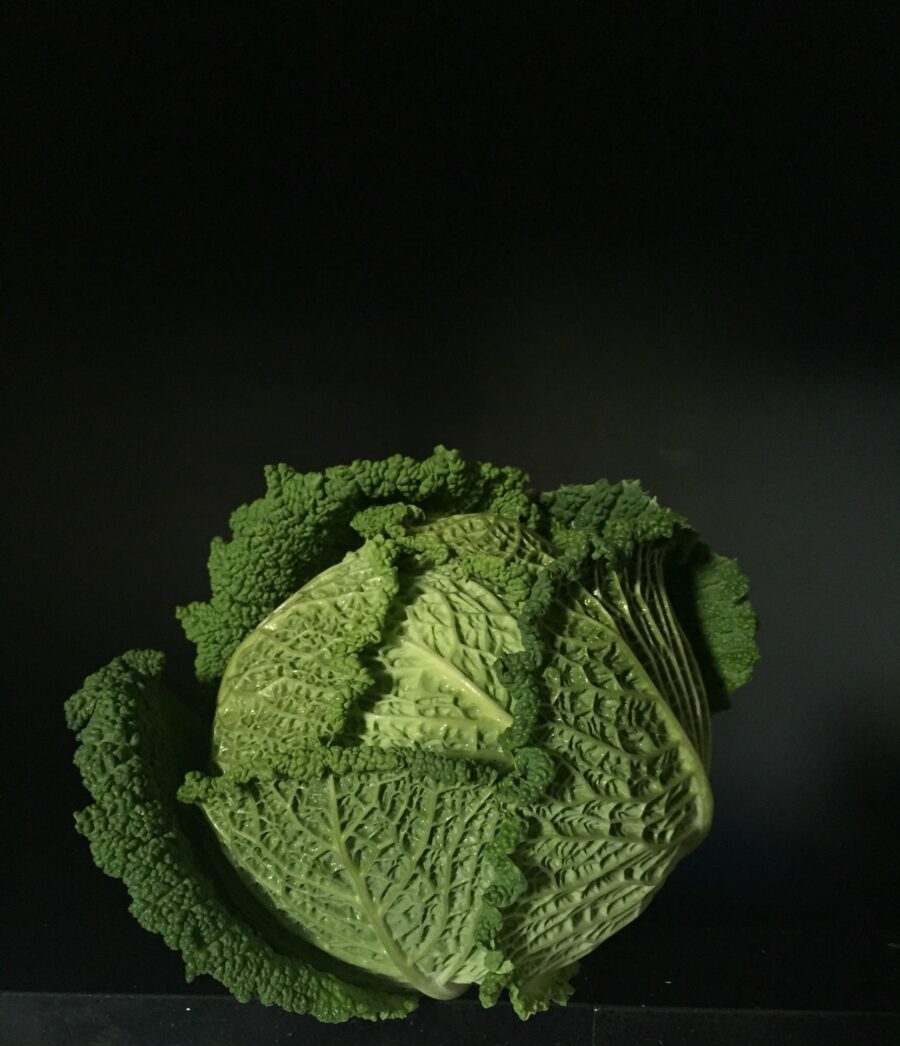
Invernale, elastica, carnosa, con foglia bullata e struttura sorprendentemente tecnica: la verza non è un cavolo triste da bollire fino alla resa. È una materia da sfogliare, sbianchire, arrostire, fermentare, laccare e farcire.
Savoy cabbage Brassica oleracea var. sabauda
Wintery, elastic and meaty, with crinkled leaves and a surprisingly technical structure: Savoy cabbage is not a sad cabbage to boil into surrender. It can be leafed, blanched, roasted, fermented, glazed and filled.
Wirsing Brassica oleracea var. sabauda
Winterlich, elastisch, fleischig, mit gekrausten Blättern und einer erstaunlich technischen Struktur: Wirsing ist kein trauriger Kohl, den man bis zur Kapitulation kocht. Er lässt sich entblättern, blanchieren, rösten, fermentieren, glasieren und füllen.
Non è un contorno. È una struttura.
La verza ha una foglia resistente, nervata, elastica. Questa caratteristica la rende perfetta per cotture doppie: prima ammorbidirla, poi darle colore, crosta e profondità.
Le foglie esterne sono più tenaci e aromatiche: ottime per stufati, zuppe, fermentazioni. Le foglie interne sono più dolci e tenere: buone per involtini, saltati brevi e preparazioni più fini.
La regola è semplice: se vuoi crosta, devi asciugare. Se vuoi dolcezza, devi cuocere con calma. Se vuoi freschezza, devi introdurre acidità.
Not a side dish. A structure.
Savoy cabbage has firm, ribbed, elastic leaves. This makes it perfect for two-step cooking: first make it pliable, then give it colour, crust and depth.
The outer leaves are tougher and more aromatic: good for braises, soups and fermentation. The inner leaves are sweeter and more tender: better for stuffed leaves, quick sautés and more precise preparations.
The rule is simple: for crust, remove moisture. For sweetness, cook gently. For freshness, add acidity.
Keine Beilage. Eine Struktur.
Wirsing hat feste, gerippte, elastische Blätter. Genau deshalb eignet er sich für zweistufige Garprozesse: erst geschmeidig machen, dann Farbe, Röstaromen und Tiefe geben.
Die äußeren Blätter sind kräftiger und aromatischer: gut für Schmorgerichte, Suppen und Fermentation. Die inneren Blätter sind süßer und zarter: gut für Wirsingrouladen, kurze Pfannengerichte und feinere Zubereitungen.
Die Regel ist einfach: Für Kruste muss Wasser weg. Für Süße braucht es Zeit. Für Frische braucht es Säure.
Basta verza bollita da mensa punitiva.
La verza sviluppa carattere quando incontra grasso buono, acidità, calore secco e sale misurato. Il problema classico è l’acqua: troppa acqua in cottura porta odore pesante, colore spento e consistenza molle.
In una cucina moderna conviene trattarla come una carne bianca vegetale: prima gestione dell’umidità, poi rosolatura o forno, infine glassa, salsa o acidità.
Nota pratica: il cattivo odore non è destino. Arriva soprattutto da cotture lunghe, coperte e acquose. Quindi: taglio corretto, pentola larga, cottura controllata, acidità finale.
No more punishment-canteen cabbage.
Savoy cabbage develops character with good fat, acidity, dry heat and measured salt. The classic problem is water: too much water during cooking means heavy smell, dull colour and limp texture.
In a modern kitchen it helps to treat it like a vegetable white meat: manage moisture first, brown or roast it, then finish with glaze, sauce or acidity.
Practical note: the smell is not destiny. It mostly comes from long, covered, watery cooking. So: correct cutting, a wide pan, controlled heat and acidity at the end.
Schluss mit traurigem Kantinen-Wirsing.
Wirsing entwickelt Charakter mit gutem Fett, Säure, trockener Hitze und sauber dosiertem Salz. Das klassische Problem ist Wasser: Zu viel Wasser beim Garen bringt schweren Kohlgeruch, matte Farbe und schlaffe Textur.
In einer modernen Küche hilft es, Wirsing wie ein pflanzliches helles Fleisch zu behandeln: zuerst Feuchtigkeit steuern, dann anrösten oder backen, danach mit Glasur, Sauce oder Säure abschließen.
Praktische Notiz: Kohlgeruch ist kein Schicksal. Er entsteht vor allem durch langes, abgedecktes und wässriges Garen. Also: sauber schneiden, breite Pfanne, kontrollierte Hitze, Säure am Ende.
Come farla funzionare davvero.
How to make it actually work.
Wie Wirsing wirklich funktioniert.
- Scegliere
Testa compatta ma non durissima, foglie vive, nessun odore acido, taglio del torsolo non secco.Choosing
A compact but not rock-hard head, lively leaves, no sour smell and no dry cut on the core.Auswählen
Ein kompakter, aber nicht steinharter Kopf, frische Blätter, kein saurer Geruch und keine vertrocknete Schnittfläche am Strunk. - Sfogliare
Stacca le foglie grandi per involtini. Usa il cuore per arrosto o saltato. Le coste grosse si possono assottigliare o usare in brodo.Separating leaves
Use large leaves for stuffed rolls. Use the core for roasting or quick sautés. Thick ribs can be thinned or used for stock.Blätter lösen
Große Blätter für Rouladen nehmen. Das Herz für Rösten oder Pfanne nutzen. Dicke Rippen dünn schneiden oder für Gemüsefond verwenden. - Sbianchire
30–45 secondi in acqua bollente salata 15 g/L, poi ghiaccio. Serve per elasticità e colore. Dopo: asciugare molto bene.Blanching
30–45 seconds in boiling salted water, 15 g/L, then ice water. It gives elasticity and colour. Dry very well afterwards.Blanchieren
30–45 Sekunden in kochendem Salzwasser, 15 g/L, danach Eiswasser. Das gibt Elastizität und Farbe. Danach sehr gründlich trocknen. - Arrostire
Taglia a spicchi con torsolo. Rosola in ghisa, poi forno caldo. Obiettivo: bordi scuri, cuore morbido, forma ancora integra.Roasting
Cut into wedges with the core attached. Sear in cast iron, then hot oven. Aim for dark edges, tender heart, still holding shape.Rösten
In Spalten mit Strunk schneiden. In Gusseisen anrösten, dann heißer Ofen. Ziel: dunkle Ränder, weiches Inneres, stabile Form. - Fermentare
Sale 2% sul peso della verdura, vaso pulito, tutto sotto salamoia, 18–22°C. Target prudente: pH sotto 4,0, poi frigo.Fermenting
2% salt by vegetable weight, clean jar, everything under brine, 18–22°C. Conservative target: pH below 4.0, then refrigerate.Fermentieren
2% Salz auf das Gemüsegewicht, sauberes Glas, alles unter Lake, 18–22°C. Vorsichtiges Ziel: pH unter 4,0, danach kühlen. - Equilibrare
La verza ama cumino, senape, pepe, acciuga, agrumi fermentati, kefir, yogurt, burro, miso, funghi, farro, salsiccia, castagne e legumi.Balancing
Savoy cabbage works with caraway, mustard, pepper, anchovy, fermented citrus, kefir, yoghurt, butter, miso, mushrooms, farro, sausage, chestnuts and legumes.Ausbalancieren
Wirsing passt zu Kümmel, Senf, Pfeffer, Sardelle, Salzzitrone, Kefir, Joghurt, Butter, Miso, Pilzen, Farro/Dinkel, Wurst, Maronen und Hülsenfrüchten.
Sei preparazioni tecniche, leggibili e cucinabili.
La verza non va nascosta: va educata. Calore, sale, acidità e asciugatura sono i quattro maestri severi.
Le ricette si aprono cliccando. Ho corretto dosi, sequenze, temperature, note operative e abbinamenti vino.
Six technical, readable and cookable preparations.
Savoy cabbage should not be hidden: it should be trained. Heat, salt, acidity and drying are the four strict teachers.
Open the recipes by clicking. Doses, sequences, temperatures, notes and wine pairings have been cleaned up.
Sechs technische, lesbare und kochbare Zubereitungen.
Wirsing muss man nicht verstecken: man muss ihn führen. Hitze, Salz, Säure und Trocknen sind die vier strengen Lehrer.
Die Rezepte öffnen sich per Klick. Mengen, Abläufe, Temperaturen, operative Hinweise und Weinempfehlungen sind bereinigt.
Fermentazione base: kraut di verza al 2%Basic fermentation: 2% Savoy cabbage krautGrundfermentation: Wirsing nach Sauerkraut-Art, 2%base / fermentazionebase / fermentationBasis / Fermentation
Dosi
- Verza affettata fine: 600 g
- Sale marino non iodato: 12 g, cioè 2%
- Semi di senape: 1,8 g, cioè 0,3% opzionale
- Cumino in semi: 1,5 g, cioè 0,25% opzionale
- Pepe nero o Sichuan: 0,3–0,5 g opzionale
Utensili
- Vaso da fermentazione 0,75–1 L
- Peso o pressino
- Bilancia precisa
- pH-metro o cartine pH
Procedura
- Elimina foglie rovinate e torsolo duro. Affetta la verza a 1–2 mm.
- Pesa la verdura pulita e calcola il sale al 2%.
- Massaggia 3–5 minuti finché la verza rilascia salamoia.
- Aggiungi senape, cumino e pepe se li usi.
- Riempi il vaso comprimendo bene. La verdura deve restare sempre sotto salamoia.
- Se dopo 1 ora la salamoia non copre, aggiungi poca salamoia al 2%: 20 g sale per 1 L acqua bollita e raffreddata.
- Lascia 3–4 cm di spazio in testa. Fermenta a 18–22°C per 5–7 giorni.
- Controlla profumo, colore e pH. Target prudente: pH < 4,0. Poi frigo.
Nota sicurezza: se compare muffa colorata, odore marcio o consistenza viscida anomala, butta. La fermentazione deve essere acida, vegetale, lattica, non sospetta.
Doses
- Finely sliced Savoy cabbage: 600 g
- Non-iodized sea salt: 12 g, 2%
- Mustard seeds: 1.8 g, 0.3%, optional
- Caraway seeds: 1.5 g, 0.25%, optional
- Black or Sichuan pepper: 0.3–0.5 g, optional
Tools
- 0.75–1 L fermentation jar
- Fermentation weight or press
- Precise scale
- pH meter or pH strips
Method
- Remove damaged leaves and the hard core. Slice the cabbage 1–2 mm thick.
- Weigh the prepared vegetable and calculate 2% salt.
- Massage for 3–5 minutes until the cabbage releases brine.
- Add mustard, caraway and pepper if using.
- Pack tightly into the jar. The vegetable must always stay below the brine.
- If after 1 hour the brine does not cover it, add a little 2% brine: 20 g salt per 1 L boiled and cooled water.
- Leave 3–4 cm headspace. Ferment at 18–22°C for 5–7 days.
- Check aroma, colour and pH. Conservative target: pH < 4.0. Then refrigerate.
Safety note: coloured mould, rotten smell or abnormal sliminess means discard it. It should smell acidic, vegetal and lactic, not suspicious.
Mengen
- Fein geschnittener Wirsing: 600 g
- Nicht jodiertes Meersalz: 12 g, also 2%
- Senfkörner: 1,8 g, 0,3%, optional
- Kümmel: 1,5 g, 0,25%, optional
- Schwarzer Pfeffer oder Sichuanpfeffer: 0,3–0,5 g, optional
Werkzeug
- Fermentationsglas 0,75–1 L
- Gärgewicht oder Pressgewicht
- Präzisionswaage
- pH-Meter oder pH-Streifen
Zubereitung
- Beschädigte Blätter und harten Strunk entfernen. Wirsing 1–2 mm fein schneiden.
- Geputztes Gemüse wiegen und 2% Salz berechnen.
- 3–5 Minuten kneten, bis der Wirsing Lake zieht.
- Senf, Kümmel und Pfeffer nach Wunsch zugeben.
- Fest ins Glas drücken. Das Gemüse muss immer unter der Lake bleiben.
- Wenn nach 1 Stunde nicht genug Lake vorhanden ist, etwas 2%-Lake zugeben: 20 g Salz auf 1 L abgekochtes, abgekühltes Wasser.
- 3–4 cm Kopfraum lassen. Bei 18–22°C 5–7 Tage fermentieren.
- Geruch, Farbe und pH kontrollieren. Vorsichtiges Ziel: pH < 4,0. Danach kühlen.
Sicherheit: Farbiger Schimmel, fauliger Geruch oder untypisch schleimige Konsistenz bedeutet: entsorgen. Die Fermentation soll sauer, gemüsig und milchsauer riechen, nicht verdächtig.
Verza arrosto, crema acida di patate al kefir, kraut 2%Roasted Savoy cabbage, kefir potato cream, 2% krautGerösteter Wirsing, Kartoffel-Kefir-Creme, 2% Fermentationpiatto vegetalevegetable dishGemüsegericht
Dosi e allergeni
- 4 porzioni
- Allergeni: latte, se usi burro e kefir
Ingredienti: verza arrosto
- Verza piccola: 1 pezzo, circa 600–700 g
- Olio extravergine: 25 g
- Burro chiarificato: 30 g
- Aceto di mele o kombucha nature: 10 g
- Cumino in polvere: 0,5 g
- Sale: 6–7 g
- Pepe bianco q.b.
Crema patate e kefir
- Patate a pasta bianca: 400 g
- Kefir intero: 180–200 g
- Burro: 40 g
- Sale: 5 g circa
- Acqua di cottura salata: 10 g/L
Procedura
- Taglia la verza in 4 spicchi mantenendo il torsolo.
- Sala leggermente gli spicchi e lasciali 10 minuti. Tampona molto bene.
- Rosola in ghisa con olio, 3–4 minuti per lato.
- Passa in forno ventilato a 220°C per 12–14 minuti. Cuore: 90–92°C.
- Lessa le patate 18–20 minuti. Scola e asciuga 1 minuto in pentola.
- Frulla patate, burro e poca acqua di cottura. Aggiungi il kefir fuori dal bollore, intorno a 55–60°C, per evitare separazioni.
- In padella fai una glassa veloce con burro chiarificato, aceto e cumino. Nappa la verza 30–40 secondi.
- Servi crema a specchio, spicchio arrosto, kraut sgocciolato e pepe bianco.
Vino
- Alto Adige DOC Riesling secco: acidità, lime, nota minerale; pulisce burro e fermentazione.
- Trento DOC Brut: bolla e freschezza contro crema, tostatura e acidità lattica.
Nota operativa: il kraut va sgocciolato bene. Se bagna la crosta, perdi il contrasto principale del piatto.
Doses and allergens
- 4 servings
- Allergens: milk, if using butter and kefir
Ingredients: roasted cabbage
- Small Savoy cabbage: 1, about 600–700 g
- Extra virgin olive oil: 25 g
- Clarified butter: 30 g
- Apple cider vinegar or plain kombucha: 10 g
- Ground caraway: 0.5 g
- Salt: 6–7 g
- White pepper to taste
Potato and kefir cream
- White-fleshed potatoes: 400 g
- Full-fat kefir: 180–200 g
- Butter: 40 g
- Salt: about 5 g
- Salted cooking water: 10 g/L
Method
- Cut cabbage into 4 wedges, keeping the core attached.
- Salt lightly and rest 10 minutes. Pat very dry.
- Sear in cast iron with oil, 3–4 minutes per side.
- Finish in a 220°C fan oven for 12–14 minutes. Core temperature: 90–92°C.
- Boil potatoes 18–20 minutes. Drain and dry 1 minute in the pot.
- Blend potatoes, butter and a little cooking water. Add kefir off the boil, around 55–60°C, to avoid splitting.
- Make a quick glaze with clarified butter, vinegar and caraway. Spoon over the cabbage for 30–40 seconds.
- Plate potato cream, roasted wedge, drained kraut and white pepper.
Wine
- Alto Adige DOC dry Riesling: acidity, lime and mineral notes clean up butter and fermentation.
- Trento DOC Brut: bubbles and freshness against cream, roasting and lactic acidity.
Operational note: drain the kraut well. If it wets the crust, you lose the main contrast of the dish.
Mengen und Allergene
- 4 Portionen
- Allergene: Milch, wenn Butter und Kefir verwendet werden
Zutaten: gerösteter Wirsing
- Kleiner Wirsing: 1 Stück, ca. 600–700 g
- Olivenöl extra vergine: 25 g
- Butterschmalz: 30 g
- Apfelessig oder naturbelassener Kombucha: 10 g
- Gemahlener Kümmel: 0,5 g
- Salz: 6–7 g
- Weißer Pfeffer nach Geschmack
Kartoffel-Kefir-Creme
- Mehlig bis vorwiegend festkochende Kartoffeln: 400 g
- Vollmilch-Kefir: 180–200 g
- Butter: 40 g
- Salz: ca. 5 g
- Salzwasser zum Kochen: 10 g/L
Zubereitung
- Wirsing in 4 Spalten schneiden, den Strunk als Halt dranlassen.
- Leicht salzen und 10 Minuten ziehen lassen. Sehr gut trocken tupfen.
- In Gusseisen mit Öl 3–4 Minuten pro Seite anrösten.
- Im Umluftofen bei 220°C 12–14 Minuten fertig garen. Kerntemperatur: 90–92°C.
- Kartoffeln 18–20 Minuten kochen. Abgießen und 1 Minute im Topf ausdampfen lassen.
- Kartoffeln, Butter und etwas Kochwasser mixen. Kefir erst abseits vom Kochen bei etwa 55–60°C einarbeiten, damit die Creme nicht gerinnt.
- Aus Butterschmalz, Essig und Kümmel eine schnelle Glasur machen. Wirsing 30–40 Sekunden nappieren.
- Kartoffelcreme, geröstete Wirsingspalte, gut abgetropften fermentierten Wirsing und weißen Pfeffer anrichten.
Wein
- Alto Adige DOC trockener Riesling: Säure, Limette, mineralische Note; reinigt Butter und Fermentation.
- Trento DOC Brut: Perlage und Frische gegen Creme, Röstaromen und milchsäuerliche Noten.
Operative Notiz: Der fermentierte Wirsing muss gut abtropfen. Wenn er die Kruste nässt, verliert das Gericht seinen wichtigsten Kontrast.
Involtini di verza, farro e shiitake allo shio-kojiSavoy cabbage rolls with farro, shiitake and shio-kojiWirsingrouladen mit Farro, Shiitake und Shio-Kojiripieno / umamifilling / umamiFüllung / Umami
Dosi e allergeni
- 4 porzioni, 8 involtini
- Allergeni: glutine, per il farro
Ingredienti
- Foglie grandi di verza: 8 + 2 di scorta
- Acqua per sbianchire con sale 15 g/L
- Farro perlato: 200 g crudo
- Shiitake freschi: 250 g, a fettine
- Shio-koji: 25 g circa
- Scalogno: 30 g, tritato
- Olio extravergine: 25 g
- Prezzemolo: 6 g
- Miso di ceci: 40 g
- Brodo vegetale: 140–160 g totali
- Miele di castagno: 8 g
- Buccia di limone fermentato: 15–20 g, sciacquata
Procedura
- Cuoci il farro 18–20 minuti in acqua leggermente salata. Scola e asciuga.
- Incidi la costa delle foglie a V. Sbollenta 45 secondi, raffredda in ghiaccio, asciuga molto bene.
- Rosola scalogno e shiitake 4–5 minuti. Fuori fuoco incorpora lo shio-koji.
- Unisci farro e prezzemolo. Assaggia prima di salare.
- Farcisci ogni foglia con 80–95 g di ripieno. Chiudi stretto.
- Emulsiona miso di ceci, 40–60 g brodo, miele e 10 g olio in una lacca fluida.
- Sigilla gli involtini in padella appena unta, 30–40 secondi per lato.
- Spennella con glassa e passa in forno a 200°C per 6–7 minuti.
- Frulla limone fermentato, 100 g brodo caldo e 20 g olio. Servi salsa sotto e involtini sopra.
Vino
- Verdicchio dei Castelli di Jesi Classico Superiore DOC: mandorla, sale, struttura, ottimo con miso e limone fermentato.
- Gewürztraminer Alto Adige DOC secco: aromatico, speziato, dialoga con shiitake e koji.
Nota tecnica: lo shio-koji aumenta umami e succosità. Non usarlo come sale normale: la sua sapidità cambia molto secondo marca e maturazione.
Doses and allergens
- 4 servings, 8 rolls
- Allergens: gluten from farro
Ingredients
- Large Savoy cabbage leaves: 8 + 2 spare
- Blanching water with 15 g/L salt
- Pearled farro: 200 g raw
- Fresh shiitake: 250 g, sliced
- Shio-koji: about 25 g
- Shallot: 30 g, chopped
- Extra virgin olive oil: 25 g
- Parsley: 6 g
- Chickpea miso: 40 g
- Vegetable stock: 140–160 g total
- Chestnut honey: 8 g
- Preserved lemon peel: 15–20 g, rinsed
Method
- Cook farro 18–20 minutes in lightly salted water. Drain and dry.
- Cut the thick rib of each leaf in a V shape. Blanch 45 seconds, chill in ice water, dry very well.
- Sauté shallot and shiitake for 4–5 minutes. Off the heat, mix in shio-koji.
- Add farro and parsley. Taste before salting.
- Fill each leaf with 80–95 g filling. Roll tightly.
- Emulsify chickpea miso, 40–60 g stock, honey and 10 g oil into a fluid glaze.
- Sear the rolls in a lightly oiled pan, 30–40 seconds per side.
- Brush with glaze and bake at 200°C for 6–7 minutes.
- Blend preserved lemon, 100 g warm stock and 20 g oil. Plate sauce underneath and rolls on top.
Wine
- Verdicchio dei Castelli di Jesi Classico Superiore DOC: almond, salinity and structure; good with miso and preserved lemon.
- Dry Alto Adige DOC Gewürztraminer: aromatic and spicy; works with shiitake and koji.
Technical note: shio-koji increases umami and juiciness. Do not use it like normal salt: salinity varies a lot by brand and maturation.
Mengen und Allergene
- 4 Portionen, 8 Rouladen
- Allergene: Gluten durch Farro/Dinkel
Zutaten
- Große Wirsingblätter: 8 + 2 Reserve
- Blanchierwasser mit 15 g/L Salz
- Perl-Farro oder Perldinkel: 200 g roh
- Frische Shiitake: 250 g, in Scheiben
- Shio-Koji: ca. 25 g
- Schalotte: 30 g, gehackt
- Olivenöl extra vergine: 25 g
- Petersilie: 6 g
- Kichererbsen-Miso: 40 g
- Gemüsefond: 140–160 g insgesamt
- Kastanienhonig: 8 g
- Schale von Salzzitrone: 15–20 g, abgespült
Zubereitung
- Farro/Dinkel 18–20 Minuten in leicht gesalzenem Wasser garen. Abgießen und ausdampfen lassen.
- Dicke Blattrippe V-förmig einschneiden. 45 Sekunden blanchieren, in Eiswasser abschrecken, sehr gut trocknen.
- Schalotte und Shiitake 4–5 Minuten anbraten. Abseits der Hitze Shio-Koji einarbeiten.
- Farro und Petersilie zugeben. Vor dem Salzen probieren.
- Jedes Blatt mit 80–95 g Füllung belegen und straff einrollen.
- Kichererbsen-Miso, 40–60 g Fond, Honig und 10 g Öl zu einer fließenden Glasur emulgieren.
- Rouladen in leicht geölter Pfanne 30–40 Sekunden pro Seite anbraten.
- Mit Glasur bepinseln und bei 200°C 6–7 Minuten in den Ofen geben.
- Salzzitrone, 100 g warmen Fond und 20 g Öl mixen. Sauce unten, Rouladen oben anrichten.
Wein
- Verdicchio dei Castelli di Jesi Classico Superiore DOC: Mandel, Salzspur und Struktur; gut zu Miso und Salzzitrone.
- Trockener Gewürztraminer Alto Adige DOC: aromatisch und würzig; passt zu Shiitake und Koji.
Technische Notiz: Shio-Koji verstärkt Umami und Saftigkeit. Nicht wie normales Salz dosieren: Salzgehalt variiert stark je nach Marke und Reife.
Verza stufata al vino bianco, acciuga, aglio e limoneBraised Savoy cabbage with white wine, anchovy, garlic and lemonGeschmorter Wirsing mit Weißwein, Sardelle, Knoblauch und Zitronecontorno serioserious side dishernste Beilage
Dosi e allergeni
- 4 porzioni
- Allergeni: pesce, se usi acciuga
Ingredienti
- Verza pulita: 700 g
- Olio extravergine: 45 g
- Aglio: 1 spicchio schiacciato
- Acciughe sottolio: 2 filetti, opzionali
- Vino bianco secco: 80 g
- Aceto di vino bianco o succo di limone: 8–10 g
- Scorza di limone: poca
- Peperoncino facoltativo, sale 6 g circa, pepe nero
Procedura
- Taglia la verza a strisce da 1 cm. Tieni separate coste grosse e foglie sottili.
- Scalda olio, aglio e acciuga finché l’acciuga si scioglie.
- Aggiungi prima le coste e cuoci 3 minuti.
- Aggiungi foglie, sale, pepe e vino bianco.
- Copri 5 minuti, poi scopri e fai asciugare 6–8 minuti.
- Finisci con aceto o limone e scorza. Riposa 5 minuti prima di servire.
Uso e vino
- Con maiale arrosto, salsiccia, baccalà, patate, uova, pane tostato.
- Versione vegetale: togli acciuga e aggiungi 15 g miso chiaro fuori fuoco.
- Soave Classico DOC oppure Grechetto Umbria DOC.
Nota tecnica: coprire solo all’inizio. Se resta coperta fino alla fine, perde colore e diventa acquosa.
Doses and allergens
- 4 servings
- Allergens: fish, if using anchovy
Ingredients
- Cleaned Savoy cabbage: 700 g
- Extra virgin olive oil: 45 g
- Garlic: 1 crushed clove
- Anchovy fillets in oil: 2, optional
- Dry white wine: 80 g
- White wine vinegar or lemon juice: 8–10 g
- A little lemon zest
- Optional chilli, about 6 g salt, black pepper
Method
- Cut cabbage into 1 cm strips. Keep thick ribs and thin leaves separate.
- Heat oil, garlic and anchovy until the anchovy melts.
- Add thick ribs first and cook 3 minutes.
- Add leaves, salt, pepper and white wine.
- Cover 5 minutes, then uncover and reduce 6–8 minutes.
- Finish with vinegar or lemon and zest. Rest 5 minutes before serving.
Use and wine
- With roast pork, sausage, salt cod, potatoes, eggs or toasted bread.
- Vegetable version: omit anchovy and add 15 g light miso off the heat.
- Soave Classico DOC or Grechetto Umbria DOC.
Technical note: cover only at the beginning. If it stays covered until the end, it loses colour and becomes watery.
Mengen und Allergene
- 4 Portionen
- Allergene: Fisch, wenn Sardelle verwendet wird
Zutaten
- Geputzter Wirsing: 700 g
- Olivenöl extra vergine: 45 g
- Knoblauch: 1 angedrückte Zehe
- Sardellenfilets in Öl: 2, optional
- Trockener Weißwein: 80 g
- Weißweinessig oder Zitronensaft: 8–10 g
- Etwas Zitronenschale
- Optional Chili, ca. 6 g Salz, schwarzer Pfeffer
Zubereitung
- Wirsing in 1 cm breite Streifen schneiden. Dicke Rippen und zarte Blätter getrennt halten.
- Öl, Knoblauch und Sardelle erhitzen, bis die Sardelle schmilzt.
- Zuerst die dickeren Rippen zugeben und 3 Minuten garen.
- Blätter, Salz, Pfeffer und Weißwein zugeben.
- 5 Minuten abdecken, dann offen 6–8 Minuten einkochen lassen.
- Mit Essig oder Zitrone und Schale abschließen. 5 Minuten ruhen lassen.
Verwendung und Wein
- Zu Schweinebraten, Wurst, Baccalà, Kartoffeln, Eiern oder Röstbrot.
- Vegetarische Version: Sardelle weglassen und 15 g helles Miso abseits der Hitze zugeben.
- Soave Classico DOC oder Grechetto Umbria DOC.
Technische Notiz: Nur am Anfang abdecken. Bleibt der Wirsing bis zum Ende zugedeckt, verliert er Farbe und wird wässrig.
Verza saltata croccante, nocciole, senape e limone fermentatoCrisp sautéed Savoy cabbage, hazelnuts, mustard and preserved lemonKnackig gebratener Wirsing, Haselnüsse, Senf und Salzzitronerapida / vegetalequick / vegetableschnell / Gemüse
Dosi
- 4 porzioni leggere
- Tempo totale: 18–22 minuti
Ingredienti
- Verza: 500 g, tagliata fine
- Olio extravergine: 35 g
- Nocciole tostate: 40 g, tritate grossolanamente
- Senape in grani: 12 g
- Buccia di limone fermentato: 10 g, sciacquata e tritata
- Aceto di mele: 8 g
- Sale: 4–5 g
- Pepe nero q.b.
Procedura
- Taglia la verza fine e asciugala bene.
- Scalda una padella larga: deve essere davvero calda.
- Aggiungi olio e verza. Salta senza muovere troppo per 2 minuti: deve prendere colore.
- Aggiungi sale e senape, poi continua 4–5 minuti.
- Fuori fuoco aggiungi limone fermentato, aceto e nocciole.
- Servi subito, prima che perda croccantezza.
Vino
- Etna Bianco DOC: sapidità, agrume, tensione minerale.
- Franciacorta Satèn: più morbido, elegante con nocciole e senape.
Nota operativa: padella larga, fuoco vivo, poca massa per volta. Se fai montagna di verza in padella, non salti: fai sauna.
Doses
- 4 light servings
- Total time: 18–22 minutes
Ingredients
- Savoy cabbage: 500 g, finely sliced
- Extra virgin olive oil: 35 g
- Toasted hazelnuts: 40 g, roughly chopped
- Wholegrain mustard: 12 g
- Preserved lemon peel: 10 g, rinsed and chopped
- Apple cider vinegar: 8 g
- Salt: 4–5 g
- Black pepper to taste
Method
- Slice cabbage finely and dry it well.
- Heat a wide pan until really hot.
- Add oil and cabbage. Let it colour for 2 minutes without moving too much.
- Add salt and mustard, then cook 4–5 more minutes.
- Off the heat add preserved lemon, vinegar and hazelnuts.
- Serve immediately, before it loses crispness.
Wine
- Etna Bianco DOC: salinity, citrus and mineral tension.
- Franciacorta Satèn: softer and elegant with hazelnut and mustard.
Operational note: wide pan, high heat, small batches. Too much cabbage in the pan means steaming, not sautéing.
Mengen
- 4 leichte Portionen
- Gesamtzeit: 18–22 Minuten
Zutaten
- Wirsing: 500 g, fein geschnitten
- Olivenöl extra vergine: 35 g
- Geröstete Haselnüsse: 40 g, grob gehackt
- Körniger Senf: 12 g
- Schale von Salzzitrone: 10 g, abgespült und gehackt
- Apfelessig: 8 g
- Salz: 4–5 g
- Schwarzer Pfeffer nach Geschmack
Zubereitung
- Wirsing fein schneiden und gut trocknen.
- Eine breite Pfanne richtig heiß werden lassen.
- Öl und Wirsing zugeben. 2 Minuten Farbe nehmen lassen, ohne zu viel zu bewegen.
- Salz und Senf zugeben, weitere 4–5 Minuten garen.
- Abseits der Hitze Salzzitrone, Essig und Haselnüsse zugeben.
- Sofort servieren, bevor die Knackigkeit verloren geht.
Wein
- Etna Bianco DOC: Salzspur, Zitrus, mineralische Spannung.
- Franciacorta Satèn: weicher, elegant mit Haselnuss und Senf.
Operative Notiz: breite Pfanne, hohe Hitze, kleine Mengen. Zu viel Wirsing in der Pfanne bedeutet Dämpfen, nicht Braten.
Zuppa di verza, ceci, patate e pane tostato all’aglioSavoy cabbage soup with chickpeas, potatoes and garlic toastWirsingsuppe mit Kichererbsen, Kartoffeln und Knoblauchbrotinverno / cucina poverawinter / humble cookingWinter / einfache Küche
Dosi
- 4 porzioni abbondanti
- Tempo: 45 minuti con ceci già cotti
Ingredienti
- Verza pulita: 500 g
- Ceci cotti: 350 g
- Patate: 300 g, a cubi
- Cipolla: 100 g, carota: 80 g, sedano: 60 g
- Aglio: 1 spicchio
- Olio extravergine: 50 g
- Brodo vegetale o acqua: 1,1 L
- Rosmarino: 1 rametto
- Alloro: 1 foglia
- Pane rustico: 4 fette
- Sale e pepe q.b.
Procedura
- Fai un fondo con cipolla, sedano, carota, aglio e 35 g olio per 8–10 minuti.
- Aggiungi patate, ceci, rosmarino e alloro.
- Copri con brodo e cuoci 18 minuti.
- Aggiungi la verza tagliata a strisce e cuoci altri 10–12 minuti.
- Schiaccia una parte di patate e ceci per dare corpo alla zuppa.
- Tosta il pane, sfrega con aglio, condisci con olio.
- Servi zuppa calda, pane tostato, pepe nero e olio crudo.
Vino
- Trebbiano Spoletino DOC: struttura, acidità, nota erbacea e buona presa sulla zuppa.
- Cerasuolo d’Abruzzo DOC: rosato serio, adatto a legumi, pane e verza.
Nota tecnica: aggiungi la verza dopo patate e ceci. Se la metti subito, perde colore e freschezza.
Doses
- 4 generous servings
- Time: 45 minutes with cooked chickpeas
Ingredients
- Cleaned Savoy cabbage: 500 g
- Cooked chickpeas: 350 g
- Potatoes: 300 g, diced
- Onion: 100 g, carrot: 80 g, celery: 60 g
- Garlic: 1 clove
- Extra virgin olive oil: 50 g
- Vegetable stock or water: 1.1 L
- Rosemary: 1 sprig
- Bay leaf: 1
- Rustic bread: 4 slices
- Salt and pepper to taste
Method
- Cook onion, celery, carrot, garlic and 35 g oil gently for 8–10 minutes.
- Add potatoes, chickpeas, rosemary and bay leaf.
- Cover with stock and cook 18 minutes.
- Add sliced cabbage and cook another 10–12 minutes.
- Mash some potatoes and chickpeas to give body.
- Toast bread, rub with garlic and dress with oil.
- Serve hot soup with toast, black pepper and raw olive oil.
Wine
- Trebbiano Spoletino DOC: structure, acidity and herbal note for the soup.
- Cerasuolo d’Abruzzo DOC: a serious rosé for legumes, bread and cabbage.
Technical note: add cabbage after potatoes and chickpeas. If it goes in at the beginning, it loses colour and freshness.
Mengen
- 4 große Portionen
- Zeit: 45 Minuten mit bereits gegarten Kichererbsen
Zutaten
- Geputzter Wirsing: 500 g
- Gekochte Kichererbsen: 350 g
- Kartoffeln: 300 g, gewürfelt
- Zwiebel: 100 g, Karotte: 80 g, Staudensellerie: 60 g
- Knoblauch: 1 Zehe
- Olivenöl extra vergine: 50 g
- Gemüsefond oder Wasser: 1,1 L
- Rosmarin: 1 Zweig
- Lorbeerblatt: 1
- Rustikales Brot: 4 Scheiben
- Salz und Pfeffer nach Geschmack
Zubereitung
- Zwiebel, Sellerie, Karotte, Knoblauch und 35 g Öl 8–10 Minuten sanft anschwitzen.
- Kartoffeln, Kichererbsen, Rosmarin und Lorbeer zugeben.
- Mit Fond bedecken und 18 Minuten kochen.
- Geschnittenen Wirsing zugeben und weitere 10–12 Minuten garen.
- Einen Teil der Kartoffeln und Kichererbsen zerdrücken, damit die Suppe Bindung bekommt.
- Brot rösten, mit Knoblauch einreiben und mit Öl beträufeln.
- Suppe heiß mit Röstbrot, schwarzem Pfeffer und rohem Olivenöl servieren.
Wein
- Trebbiano Spoletino DOC: Struktur, Säure und Kräuternote für die Suppe.
- Cerasuolo d’Abruzzo DOC: ein seriöser Rosé zu Hülsenfrüchten, Brot und Wirsing.
Technische Notiz: Wirsing erst nach Kartoffeln und Kichererbsen zugeben. Kommt er zu früh hinein, verliert er Farbe und Frische.
5 punti chiave.
- Sale 2% per una fermentazione ordinata, croccante e controllabile.
- Sbianchitura breve: 30–45 secondi, poi ghiaccio e asciugatura totale.
- Arrosto serio: torsolo presente, ghisa, forno caldo, cuore 90–92°C.
- Acidità finale: kefir, kraut, aceto, limone fermentato o agrumi.
- Mai troppa acqua: la verza perdona molto, ma non la pentola triste.
5 key points.
- 2% salt for orderly, crisp and controllable fermentation.
- Short blanching: 30–45 seconds, then ice water and full drying.
- Real roasting: core attached, cast iron, hot oven, 90–92°C at the centre.
- Final acidity: kefir, kraut, vinegar, preserved lemon or citrus.
- Never too much water: Savoy cabbage forgives a lot, but not a sad pot.
5 Schlüsselpunkte.
- 2% Salz für eine geordnete, knackige und kontrollierbare Fermentation.
- Kurzes Blanchieren: 30–45 Sekunden, danach Eiswasser und vollständiges Trocknen.
- Richtig rösten: Strunk dranlassen, Gusseisen, heißer Ofen, 90–92°C im Kern.
- Säure am Ende: Kefir, fermentierter Wirsing, Essig, Salzzitrone oder Zitrus.
- Nie zu viel Wasser: Wirsing verzeiht viel, aber keinen traurigen Topf.
Produzione minima sensata.
Oggi prepara un vaso di kraut: 600 g verza + 12 g sale. Domani prova la verza arrosto. Dopo 5–7 giorni usi il kraut come elemento acido nella stessa ricetta.
Versione più semplice per casa: verza stufata al vino bianco e zuppa con ceci. Due ricette oneste, zero acrobazie da laboratorio.
Piano B: se non hai kefir, usa yogurt greco allungato con poco siero o acqua calda. Per una versione vegetale, usa crema di patate con olio extravergine e succo di limone.
A sensible minimum production.
Today make one jar of kraut: 600 g Savoy cabbage + 12 g salt. Tomorrow test the roasted cabbage. After 5–7 days use the kraut as the acidic element in the same recipe.
Simpler home version: braised cabbage with white wine and the chickpea soup. Two honest recipes, no laboratory acrobatics.
Plan B: without kefir, use Greek yoghurt loosened with a little whey or warm water. For a plant-based version, use potato cream with extra virgin olive oil and lemon juice.
Sinnvolle Minimalproduktion.
Heute ein Glas fermentierten Wirsing ansetzen: 600 g Wirsing + 12 g Salz. Morgen den gerösteten Wirsing testen. Nach 5–7 Tagen den fermentierten Wirsing als Säureelement im selben Gericht verwenden.
Einfachere Version für zu Hause: geschmorter Wirsing mit Weißwein und die Suppe mit Kichererbsen. Zwei ehrliche Rezepte, keine Laborakrobatik.
Plan B: Wenn kein Kefir da ist, griechischen Joghurt mit etwas Molke oder warmem Wasser lockern. Für eine pflanzliche Version Kartoffelcreme mit Olivenöl extra vergine und Zitronensaft verwenden.
Altre pagine utili
Related pages
Weitere Seiten
Menu vegetali, fermentazioni, ricette e consulenza gastronomica.
Se lavori su un ristorante, un hotel, un evento, un contenuto culinario o una carta stagionale e vuoi rendere più precisa la parte vegetale, possiamo parlarne.
Vegetable menus, fermentation, recipes and gastronomic consulting.
If you are working on a restaurant, hotel, event, culinary content or seasonal menu and want to make the vegetable side more precise, we can talk.
Gemüsemenüs, Fermentation, Rezepte und gastronomische Beratung.
Wenn Sie an einem Restaurant, Hotel, Event, kulinarischem Inhalt oder einer saisonalen Karte arbeiten und die Gemüseseite präziser machen möchten, können wir darüber sprechen.