 il-baba-storia-ricetta-rum-codice-completo.txt
Il babà Un dolce europeo diventato profondamente napoletano
Soffice, elastico e generosamente imbevuto, il babà è uno dei simboli più riconoscibili della pasticceria napoletana, insieme alla sfogliatella e alla pastiera.
La sua storia attraversa Polonia, Lorena, Parigi e Napoli. Una parte è documentata; un’altra appartiene alle leggende gastronomiche che, nel tempo, hanno contribuito alla sua identità.
Babà A European cake that became profoundly Neapolitan
Soft, elastic and generously soaked, babà is one of the most recognisable symbols of Neapolitan pastry, alongside sfogliatella and pastiera.
Its story travels through Poland, Lorraine, Paris and Naples. Part of it is documented; another part belongs to the culinary legends that helped shape its identity.
Babà Ein europäisches Gebäck, das zutiefst neapolitanisch wurde
Weich, elastisch und großzügig getränkt gehört der Babà neben Sfogliatella und Pastiera zu den bekanntesten Symbolen der neapolitanischen Patisserie.
Seine Geschichte führt durch Polen, Lothringen, Paris und Neapel. Ein Teil ist dokumentiert, ein anderer gehört zu den kulinarischen Legenden, die seine Identität geprägt haben.
Dalla corte di Stanislao alla pasticceria napoletana.
Il babà deriva da un dolce lievitato dell’Europa centro-orientale. La tradizione collega la sua evoluzione a Stanislao Leszczyński, re di Polonia e poi duca di Lorena, ma le versioni sul primo dolce inzuppato cambiano: Tokaji, Madeira o rum; un gesto deliberato oppure un incidente.
Più solido è il passaggio francese. A Parigi, la pasticceria Stohrer contribuì alla diffusione e alla definizione del dolce. Nel corso del Settecento e dell’Ottocento il babà entrò poi nella cultura gastronomica napoletana, dove venne adattato, perfezionato e trasformato in un’icona locale.
Anche l’etimologia è discussa. Il termine francese baba è indicato come voce di origine polacca, ma l’associazione diretta con babcia, “nonna”, non va presentata come una certezza storica.
From Stanislaus’s court to Neapolitan pastry.
Babà developed from an enriched yeast cake of Central and Eastern Europe. Tradition connects its evolution with Stanislaus Leszczyński, king of Poland and later duke of Lorraine, but accounts of the first soaked cake vary: Tokaji, Madeira or rum; a deliberate act or an accident.
The French stage is better established. In Paris, the Stohrer pastry shop helped spread and define the cake. During the eighteenth and nineteenth centuries it entered Neapolitan food culture, where it was adapted, refined and transformed into a local icon.
Its etymology is also debated. French baba is described as a word of Polish origin, but the direct connection with babcia, meaning “grandmother”, should not be treated as established fact.
Vom Hof Stanislaus’ zur neapolitanischen Patisserie.
Der Babà entwickelte sich aus einem reichhaltigen Hefekuchen Mittel- und Osteuropas. Die Überlieferung verbindet ihn mit Stanislaus Leszczyński, König von Polen und später Herzog von Lothringen. Die Geschichten über das erste Tränken unterscheiden sich jedoch: Tokajer, Madeira oder Rum; Absicht oder Zufall.
Die französische Etappe ist besser belegt. In Paris trug die Patisserie Stohrer zur Verbreitung und Ausformung des Gebäcks bei. Im 18. und 19. Jahrhundert gelangte es in die neapolitanische Esskultur, wo es angepasst, verfeinert und zu einer lokalen Ikone wurde.
Auch die Etymologie ist umstritten. Das französische Wort baba gilt als polnischen Ursprungs, doch die direkte Ableitung von babcia, „Großmutter“, ist nicht eindeutig belegt.
“Si’ nu babbà.”
Detto a una persona può significare che è buona, amabile, dolce oppure particolarmente bella. Il dolce entra così nel linguaggio quotidiano come misura di piacevolezza.
“Si’ nu babbà.”
Said to a person, it can mean kind, lovable, sweet or especially attractive. The cake becomes part of everyday speech as a measure of pleasantness.
“Si’ nu babbà.”
Auf eine Person bezogen kann es gutmütig, liebenswert, süß oder besonders schön bedeuten. Das Gebäck wird so im Alltag zum Maßstab für etwas Angenehmes.
Il rum non cambia la natura delle cose.
“Aje voglia ’e mettere rumma: ’nu strunzo nun addiventa maje bbabbà.”
In italiano: puoi aggiungere tutto il rum che vuoi, ma ciò che nasce cattivo non diventerà un babà. È un modo ironico per dire che l’apparenza e gli artifici non trasformano la sostanza.
Rum cannot change the nature of things.
“Aje voglia ’e mettere rumma: ’nu strunzo nun addiventa maje bbabbà.”
In plain English: you may add as much rum as you like, but something bad will never become a babà. The saying suggests that decoration cannot change substance.
Rum verändert nicht das Wesen der Dinge.
“Aje voglia ’e mettere rumma: ’nu strunzo nun addiventa maje bbabbà.”
Sinngemäß: Man kann noch so viel Rum hinzufügen – etwas Schlechtes wird nie zu einem Babà. Äußerer Aufwand verändert nicht die Substanz.
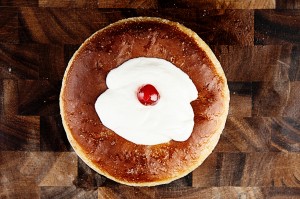
Babà al rum con scorza di limone.
Rum babà with lemon peel.
Rum-Babà mit Zitronenschale.
Per l’impasto
- 300 g di farina 00
- 100 g di farina Manitoba
- 200 ml di latte tiepido
- 30 g di lievito di birra fresco
- 4 uova
- 150 g di burro morbido
- 1 cucchiaino di sale
- 2 cucchiai di zucchero
- Gelatina o confettura di albicocche setacciata, per lucidare
- Burro e farina per lo stampo
Per la bagna
- 400 ml di acqua
- 300 g di zucchero
- 100 ml di rum
- Scorza di 2 limoni non trattati
For the dough
- 300 g Italian 00 flour or plain flour
- 100 g strong bread flour
- 200 ml lukewarm milk
- 30 g fresh yeast
- 4 eggs
- 150 g softened butter
- 1 teaspoon salt
- 2 tablespoons sugar
- Apricot glaze or strained apricot jam
- Butter and flour for the mould
For the soaking syrup
- 400 ml water
- 300 g sugar
- 100 ml rum
- Peel of 2 unwaxed lemons
Für den Teig
- 300 g Weizenmehl Type 00 oder Haushaltsmehl
- 100 g backstarkes Weizenmehl
- 200 ml lauwarme Milch
- 30 g frische Hefe
- 4 Eier
- 150 g weiche Butter
- 1 Teelöffel Salz
- 2 Esslöffel Zucker
- Aprikosenglasur oder passierte Aprikosenkonfitüre
- Butter und Mehl für die Form
Für den Tränksirup
- 400 ml Wasser
- 300 g Zucker
- 100 ml Rum
- Schale von 2 unbehandelten Zitronen
1. Attivare il lievito
- Sciogliere il lievito nel latte tiepido con lo zucchero.
- Unire circa 100 g della farina prevista e mescolare fino a ottenere una pastella liscia.
- Coprire e lasciare riposare per 20–30 minuti, finché la superficie appare gonfia e attiva.
2. Impastare
- Unire le farine restanti e cominciare a lavorare l’impasto.
- Aggiungere le uova una alla volta, aspettando che ciascuna sia assorbita prima della successiva.
- Incorporare il sale.
- Aggiungere il burro morbido poco alla volta e continuare a impastare finché la massa è lucida, elastica e si stacca dalle pareti.
3. Lievitare e cuocere
- Imburrare e infarinare uno stampo da babà o uno stampo a ciambella di circa 24 cm.
- Versare l’impasto nello stampo senza superare metà altezza.
- Lasciare lievitare in luogo tiepido finché raggiunge circa 1 cm dal bordo.
- Cuocere in forno statico preriscaldato a 180°C per circa 30–35 minuti. Se scurisce troppo, proteggere la superficie negli ultimi minuti.
- Sformare e lasciare asciugare su una griglia.
4. Preparare la bagna
- Portare a ebollizione acqua, zucchero e scorze di limone.
- Cuocere per 3–4 minuti, spegnere e lasciare intiepidire.
- Aggiungere il rum solo quando lo sciroppo non è più bollente, per conservarne meglio il profumo.
5. Inzuppare e lucidare
- Il babà deve essere completamente freddo; la bagna deve essere calda ma non bollente.
- Versare lentamente lo sciroppo più volte, lasciando al dolce il tempo di assorbirlo in modo uniforme.
- Far sgocciolare l’eccesso su una griglia.
- Scaldare leggermente la gelatina di albicocche e spennellare la superficie.
- Lasciare riposare alcune ore prima del servizio.
Punto tecnico decisivo: il babà non deve essere soltanto bagnato fuori. La sua mollica elastica deve assorbire lo sciroppo fino al centro senza disfarsi.
1. Activate the yeast
- Dissolve the yeast in lukewarm milk with the sugar.
- Add about 100 g of the flour and mix to a smooth batter.
- Cover and rest for 20–30 minutes, until visibly active.
2. Make the dough
- Add the remaining flours and begin mixing.
- Add the eggs one at a time, allowing each to be absorbed.
- Add the salt.
- Incorporate the softened butter gradually and knead until glossy, elastic and pulling away from the bowl.
3. Prove and bake
- Butter and flour a babà or 24 cm ring mould.
- Fill no more than halfway.
- Prove in a warm place until the dough reaches about 1 cm below the rim.
- Bake in a preheated conventional oven at 180°C for about 30–35 minutes.
- Unmould and let dry on a rack.
4. Make the syrup
- Bring water, sugar and lemon peel to the boil.
- Cook for 3–4 minutes, remove from the heat and allow to cool slightly.
- Add rum only when the syrup is no longer boiling, to preserve more aroma.
5. Soak and glaze
- The babà should be completely cold and the syrup hot but not boiling.
- Pour the syrup over it repeatedly, allowing time for even absorption.
- Drain excess syrup on a rack.
- Warm the apricot glaze and brush the surface.
- Rest for several hours before serving.
Key technical point: the babà must not be wet only on the outside. Its elastic crumb should absorb syrup to the centre without collapsing.
1. Hefe aktivieren
- Hefe und Zucker in lauwarmer Milch auflösen.
- Etwa 100 g Mehl einrühren, bis ein glatter Vorteig entsteht.
- Abdecken und 20–30 Minuten stehen lassen, bis er sichtbar aktiv ist.
2. Teig herstellen
- Restliches Mehl zugeben und zu kneten beginnen.
- Die Eier einzeln einarbeiten; jedes Ei vollständig aufnehmen lassen.
- Salz hinzufügen.
- Die weiche Butter nach und nach einarbeiten und kneten, bis der Teig glänzend und elastisch ist und sich von der Schüssel löst.
3. Gehen lassen und backen
- Eine Babà- oder Ringform von etwa 24 cm buttern und mehlen.
- Die Form höchstens bis zur Hälfte füllen.
- An einem warmen Ort gehen lassen, bis der Teig etwa 1 cm unter dem Rand steht.
- Im vorgeheizten Ober-/Unterhitzeofen bei 180°C etwa 30–35 Minuten backen.
- Aus der Form nehmen und auf einem Gitter trocknen lassen.
4. Sirup zubereiten
- Wasser, Zucker und Zitronenschalen aufkochen.
- 3–4 Minuten kochen, vom Herd nehmen und leicht abkühlen lassen.
- Den Rum erst einrühren, wenn der Sirup nicht mehr kocht, damit mehr Aroma erhalten bleibt.
5. Tränken und glasieren
- Der Babà muss vollständig kalt, der Sirup warm, aber nicht kochend sein.
- Den Sirup langsam und mehrfach darübergeben und gleichmäßig einziehen lassen.
- Überschüssigen Sirup auf einem Gitter abtropfen lassen.
- Aprikosenglasur leicht erwärmen und die Oberfläche bestreichen.
- Vor dem Servieren mehrere Stunden ruhen lassen.
Entscheidender Punkt: Der Babà darf nicht nur außen feucht sein. Seine elastische Krume muss den Sirup bis zum Kern aufnehmen, ohne zu zerfallen.
Tre cose che fanno la differenza.
Three details that make the difference.
Drei Details, die den Unterschied machen.
Impasto elastico
Elastic dough
Elastischer Teig
Il burro entra solo quando uova e farine hanno già costruito una struttura capace di trattenerlo.
Butter is added only after eggs and flour have formed a structure strong enough to hold it.
Die Butter wird erst eingearbeitet, wenn Eier und Mehl bereits eine tragfähige Struktur gebildet haben.
Bagna controllata
Controlled soaking
Kontrolliertes Tränken
Freddo il dolce, calda la bagna: la differenza di temperatura facilita un assorbimento regolare.
Cold cake, warm syrup: the temperature difference supports even absorption.
Kaltes Gebäck, warmer Sirup: Der Temperaturunterschied unterstützt eine gleichmäßige Aufnahme.
Servizio
Serving
Servieren
Può essere servito solo, con panna, crema pasticcera, amarene o frutta fresca, senza coprirne la struttura aromatica.
Serve it plain, with cream, custard, sour cherries or fresh fruit, without overwhelming its aromatic structure.
Pur, mit Sahne, Konditorcreme, Sauerkirschen oder frischen Früchten servieren, ohne sein Aroma zu überdecken.
Una ricetta storica, riletta con precisione.
Questa pagina appartiene all’archivio culinario di Andrea Sposini. Il testo originale è stato corretto nella lingua, distinto tra storia e leggenda e completato con un procedimento coerente con le dosi indicate.
A historical recipe reread with precision.
This page belongs to Andrea Sposini’s culinary archive. The original text has been edited, history has been separated from legend, and a complete method has been added to match the listed quantities.
Ein historisches Rezept, präzise neu gelesen.
Diese Seite gehört zu Andrea Sposinis kulinarischem Archiv. Der ursprüngliche Text wurde sprachlich überarbeitet, Geschichte und Legende wurden getrennt und die angegebenen Mengen um eine vollständige Zubereitung ergänzt.
- Eliminata la falsa certezza sull’etimologia da babcia.
- Separata la tradizione su Stanislao dai fatti meglio documentati.
- Corretto il nome della pasticceria Stohrer.
- Semplificato il passaggio sulle corti francesi e napoletane.
- Aggiunto il procedimento, assente nella pagina originale.
- The uncertain derivation from babcia is no longer presented as fact.
- Tradition about Stanislaus has been separated from better-established history.
- The name of the Stohrer pastry shop has been corrected.
- The passage concerning French and Neapolitan courts has been simplified.
- A full method has been added to the original ingredients.
- Die unsichere Ableitung von babcia wird nicht mehr als Tatsache dargestellt.
- Die Stanislaus-Legende wurde von besser belegten Fakten getrennt.
- Der Name der Patisserie Stohrer wurde korrigiert.
- Der Abschnitt über die französischen und neapolitanischen Höfe wurde vereinfacht.
- Die ursprünglichen Zutaten wurden um eine vollständige Zubereitung ergänzt.
Altre pagine dell’archivio.
More pages from the archive.
Weitere Seiten aus dem Archiv.
Ricette, menu ed esperienze culinarie.
Per sviluppare un menu, un evento privato o un progetto culturale legato al cibo, contatta Andrea.
Recipes, menus and culinary experiences.
For menu development, private events or food-culture projects, contact Andrea.
Rezepte, Menüs und kulinarische Erlebnisse.
Für Menüentwicklung, private Veranstaltungen oder Projekte zur Esskultur kannst du Andrea kontaktieren.