Fettuccine al caffè con ciliegie e salmone affumicato
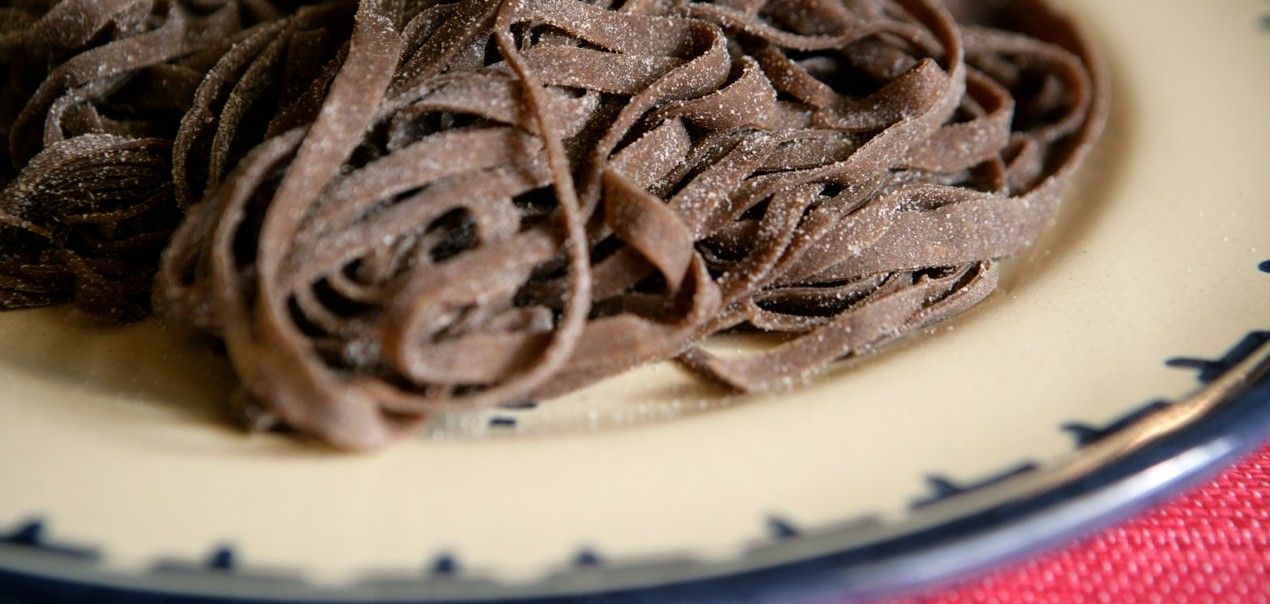
Pasta fresca al caffè, salsa alle ciliegie più concentrata e salmone affumicato aggiunto soltanto alla fine.
Coffee fettuccine with cherries and smoked salmon
Fresh coffee pasta with a more concentrated cherry sauce and smoked salmon folded in only at the end.
Kaffee-Fettuccine mit Kirschen und Räucherlachs
Frische Kaffee-Pasta mit konzentrierter Kirschsauce und Räucherlachs, der erst zum Schluss untergehoben wird.
Ingredienti
Fettuccine al caffè
- 400 g farina 00 per pasta fresca, circa 11–12% proteine
- 210 g uova intere sgusciate
- 6 g caffè espresso solubile in polvere
- 4 g sale fino
- 0–12 g acqua, solo se realmente necessaria
Salsa, ciliegie e salmone
- 180 g ciliegie denocciolate per la riduzione
- 120 g ciliegie denocciolate e tagliate in quarti
- 180 g salmone affumicato, tagliato a strisce larghe
- 25 g burro
- 10 g olio extravergine di oliva
- 30 g scalogno tritato finemente
- 60 g vino bianco secco
- 20 g brandy
- 60 g brodo vegetale leggero e non salato
- 180 g panna fresca 35% m.g.
- 12 g aceto di mele
- 8 g zucchero
- 3 g sale fino, da regolare secondo il salmone
- 0,5 g pepe rosa pestato
- 6 g aneto fresco tritato, facoltativo
- 60–100 g acqua di cottura della pasta
Procedimento
1 · Impasto
Sciogliere il caffè espresso in 10 g delle uova previste. Mescolare farina e sale, aggiungere tutte le uova e impastare 8–10 minuti. L’impasto deve risultare sodo ma non friabile. Aggiungere acqua soltanto a gocce se non si compatta. Avvolgere e riposare 40 minuti a temperatura ambiente.
2 · Sfoglia
Dividere l’impasto in quattro parti. Laminare progressivamente senza saltare gli spessori, fino a circa 1 mm. Lasciare asciugare le sfoglie 5 minuti, quindi tagliare fettuccine larghe 6–7 mm. Infarinare con pochissima semola e tenere coperte.
3 · Riduzione di ciliegie
Cuocere 180 g di ciliegie con zucchero, aceto e 1 g di sale per 8–10 minuti. Quando il liquido è ridotto e lucido, frullare e passare al setaccio. Si devono ottenere circa 120 g di salsa, non una composta acquosa.
4 · Base della salsa
Scaldare burro e olio. Stufare lo scalogno 3 minuti senza colorirlo. Unire vino e brandy e ridurre fino a circa un terzo. Aggiungere il brodo e ridurre ancora della metà. Versare la panna e cuocere dolcemente fino a ottenere una consistenza appena nappante.
5 · Cottura della pasta
Portare a ebollizione almeno 4 litri d’acqua con 28 g di sale: circa 7 g per litro, meno del normale perché il salmone è sapido. Cuocere le fettuccine 90–150 secondi, secondo spessore e asciugatura.
6 · Mantecatura
Trasferire la pasta nella salsa ancora priva di salmone. Mantecare 45–60 secondi aggiungendo poca acqua di cottura. Fuori dal fuoco unire 70 g di riduzione di ciliegie, le ciliegie fresche e metà del salmone. Mescolare una sola volta, senza cuocere il salmone.
7 · Impiattamento
Distribuire la riduzione restante sul piatto. Formare il nido di fettuccine e completare con il salmone rimasto, pepe rosa e aneto. Servire immediatamente.
Note tecniche
- Nella versione originale Andrea utilizzava caffè Arabica finemente polverizzato. Oggi preferisce il caffè espresso solubile, perché si integra completamente nell’uovo e permette un controllo più preciso dell’aroma, dell’amaro e del colore della pasta.
- Il caffè nella pasta non deve diventare il gusto dominante: funziona come una spezia tostata, capace di creare profondità e di legare la dolcezza della ciliegia alla nota affumicata del salmone.
- La ciliegia viene utilizzata in due consistenze: ridotta e filtrata per dare acidità e concentrazione, fresca per conservare succosità e tensione nel morso.
- Il salmone affumicato viene aggiunto fuori dal fuoco perché il calore diretto ne irrigidirebbe le proteine e renderebbe più aggressiva la percezione del sale e dell’affumicatura.
- La panna ha il compito di unire gli elementi, non di coprirli. La salsa deve restare brillante, fluida e sufficientemente leggera da lasciare riconoscibili caffè, ciliegia e salmone.
- Il Parmigiano non è necessario: il piatto possiede già grasso, sapidità e umami. Un elemento croccante più coerente può essere un pangrattato fine tostato con una punta di caffè.
Ricetta pubblicata per la prima volta il 28 giugno 2017 alle 16:10 e riletta nel 2026 nelle dosi, nelle tecniche e nella presentazione.
Ingredients
Coffee fettuccine
- 400 g Italian 00 flour for fresh pasta, about 11–12% protein
- 210 g whole eggs, without shells
- 6 g instant espresso powder
- 4 g fine salt
- 0–12 g water, only if genuinely needed
Sauce, cherries and salmon
- 180 g pitted cherries for the reduction
- 120 g pitted cherries, quartered
- 180 g smoked salmon, cut into broad strips
- 25 g butter
- 10 g extra-virgin olive oil
- 30 g finely chopped shallot
- 60 g dry white wine
- 20 g brandy
- 60 g light unsalted vegetable stock
- 180 g fresh cream, 35% fat
- 12 g apple cider vinegar
- 8 g sugar
- 3 g fine salt, adjusted to the salmon
- 0.5 g crushed pink peppercorns
- 6 g chopped fresh dill, optional
- 60–100 g pasta cooking water
Method
1 · Dough
Dissolve the espresso powder in 10 g of the measured egg. Mix flour and salt, add all the egg and knead for 8–10 minutes. The dough should be firm but not crumbly. Add water only drop by drop if it will not come together. Wrap and rest for 40 minutes at room temperature.
2 · Rolling and cutting
Divide into four pieces. Roll progressively without skipping settings, to about 1 mm. Air-dry the sheets for 5 minutes, then cut 6–7 mm fettuccine. Dust very lightly with semolina and keep covered.
3 · Cherry reduction
Cook 180 g cherries with sugar, vinegar and 1 g salt for 8–10 minutes. When glossy and reduced, blend and strain. The final yield should be about 120 g of sauce, not a watery compote.
4 · Sauce base
Heat butter and oil. Sweat the shallot for 3 minutes without browning. Add wine and brandy and reduce to roughly one third. Add stock and reduce by half. Pour in the cream and simmer until it lightly coats a spoon.
5 · Cooking the pasta
Boil at least 4 litres of water with 28 g salt, about 7 g per litre, because the smoked salmon is salty. Cook the fettuccine for 90–150 seconds depending on thickness and drying.
6 · Finishing
Transfer the pasta to the sauce before adding salmon. Toss for 45–60 seconds with a little cooking water. Off the heat, add 70 g cherry reduction, the quartered cherries and half the salmon. Toss only once.
7 · Plating
Spoon the remaining reduction onto the plates. Add the fettuccine nests and finish with the remaining salmon, pink pepper and dill. Serve immediately.
Technical notes
- In the original version Andrea used finely powdered Arabica coffee. Today he prefers instant espresso powder because it dissolves completely into the egg and gives more precise control over aroma, bitterness and colour.
- Coffee should not dominate the pasta. It works as a toasted spice, creating depth and linking the sweetness of cherry with the smoky character of the salmon.
- Cherry appears in two textures: reduced and strained for acidity and concentration, and fresh for juiciness and tension on the palate.
- The smoked salmon is folded in off the heat because direct heat would tighten its proteins and make salt and smoke feel harsher.
- The cream is a connecting element, not the main flavour. The sauce should remain glossy and fluid, allowing coffee, cherry and salmon to stay distinct.
- Parmesan is unnecessary because the dish already has fat, salt and umami. A more coherent crunchy element is fine toasted breadcrumbs with a small touch of coffee.
First published on 28 June 2017 at 16:10 and revisited in 2026 in its quantities, technique and presentation.
Zutaten
Kaffee-Fettuccine
- 400 g italienisches Weizenmehl Type 00 für frische Pasta, ca. 11–12% Protein
- 210 g ganze Eier ohne Schale
- 6 g lösliches Espressopulver
- 4 g feines Salz
- 0–12 g Wasser, nur falls tatsächlich nötig
Sauce, Kirschen und Lachs
- 180 g entsteinte Kirschen für die Reduktion
- 120 g entsteinte, geviertelte Kirschen
- 180 g Räucherlachs in breiten Streifen
- 25 g Butter
- 10 g natives Olivenöl extra
- 30 g fein gehackte Schalotte
- 60 g trockener Weißwein
- 20 g Brandy
- 60 g leichte, ungesalzene Gemüsebrühe
- 180 g Sahne mit 35% Fett
- 12 g Apfelessig
- 8 g Zucker
- 3 g feines Salz, je nach Lachs anpassen
- 0,5 g zerstoßener rosa Pfeffer
- 6 g gehackter frischer Dill, optional
- 60–100 g Pastakochwasser
Zubereitung
1 · Teig
Espressopulver in 10 g der abgewogenen Eimenge lösen. Mehl und Salz mischen, alle Eier zugeben und 8–10 Minuten kneten. Der Teig soll fest, aber nicht bröselig sein. Wasser nur tropfenweise zugeben, falls er sich nicht verbindet. Einwickeln und 40 Minuten bei Raumtemperatur ruhen lassen.
2 · Ausrollen und Schneiden
In vier Stücke teilen. Stufenweise bis auf etwa 1 mm ausrollen. Die Bahnen 5 Minuten antrocknen lassen und 6–7 mm breite Fettuccine schneiden. Nur leicht mit Hartweizengrieß bestäuben und abdecken.
3 · Kirschreduktion
180 g Kirschen mit Zucker, Essig und 1 g Salz 8–10 Minuten kochen. Sobald die Masse glänzt und reduziert ist, pürieren und passieren. Es sollen etwa 120 g Sauce entstehen, keine wässrige Kompottmasse.
4 · Saucenbasis
Butter und Öl erhitzen. Schalotte 3 Minuten farblos anschwitzen. Wein und Brandy zugeben und auf etwa ein Drittel reduzieren. Brühe zugeben und nochmals auf die Hälfte reduzieren. Sahne einfüllen und sanft köcheln, bis die Sauce einen Löffel leicht überzieht.
5 · Pasta kochen
Mindestens 4 Liter Wasser mit 28 g Salz aufkochen, etwa 7 g pro Liter, da der Räucherlachs salzig ist. Fettuccine je nach Dicke und Trocknung 90–150 Sekunden garen.
6 · Fertigstellen
Pasta in die Sauce geben, bevor der Lachs hinzugefügt wird. 45–60 Sekunden mit etwas Kochwasser schwenken. Vom Herd nehmen und 70 g Kirschreduktion, frische Kirschen und die Hälfte des Lachses zugeben. Nur einmal vorsichtig mischen.
7 · Anrichten
Restliche Reduktion auf die Teller geben. Fettuccine als Nest anrichten und mit restlichem Lachs, rosa Pfeffer und Dill vollenden. Sofort servieren.
Technische Hinweise
- In der ursprünglichen Version verwendete Andrea fein pulverisierten Arabica-Kaffee. Heute bevorzugt er lösliches Espressopulver, weil es sich vollständig im Ei löst und Aroma, Bitterkeit und Farbe präziser steuern lässt.
- Der Kaffee soll die Pasta nicht dominieren. Er wirkt wie ein geröstetes Gewürz, das Tiefe schafft und die Süße der Kirsche mit der Rauchnote des Lachses verbindet.
- Die Kirsche erscheint in zwei Texturen: reduziert und passiert für Säure und Konzentration, frisch für Saftigkeit und Spannung am Gaumen.
- Der Räucherlachs wird erst ohne Hitze untergehoben, da direkte Hitze die Proteine straffen und Salz sowie Rauch aggressiver wirken lassen würde.
- Die Sahne verbindet die Elemente, ohne selbst zum Hauptgeschmack zu werden. Die Sauce soll glänzend und fließend bleiben, damit Kaffee, Kirsche und Lachs klar erkennbar bleiben.
- Parmesan ist nicht nötig, da das Gericht bereits Fett, Salz und Umami besitzt. Passender ist ein feines geröstetes Paniermehl mit einer kleinen Kaffeenote.
Erstmals am 28. Juni 2017 um 16:10 veröffentlicht und 2026 hinsichtlich Mengen, Technik und Präsentation neu gelesen.