Il riso Oryza sativa — a modo mio!
Questa pagina nasce da un testo molto vecchio del mio archivio, pubblicato nel sito tra il 2008 e il 2009. Allora si chiamava Il Riso a modo mio. Oggi la tengo viva non come nostalgia, ma come traccia di lavoro: il riso è stato una delle materie con cui ho imparato a pensare cottura, assorbimento, amido, riposo, forma e servizio.
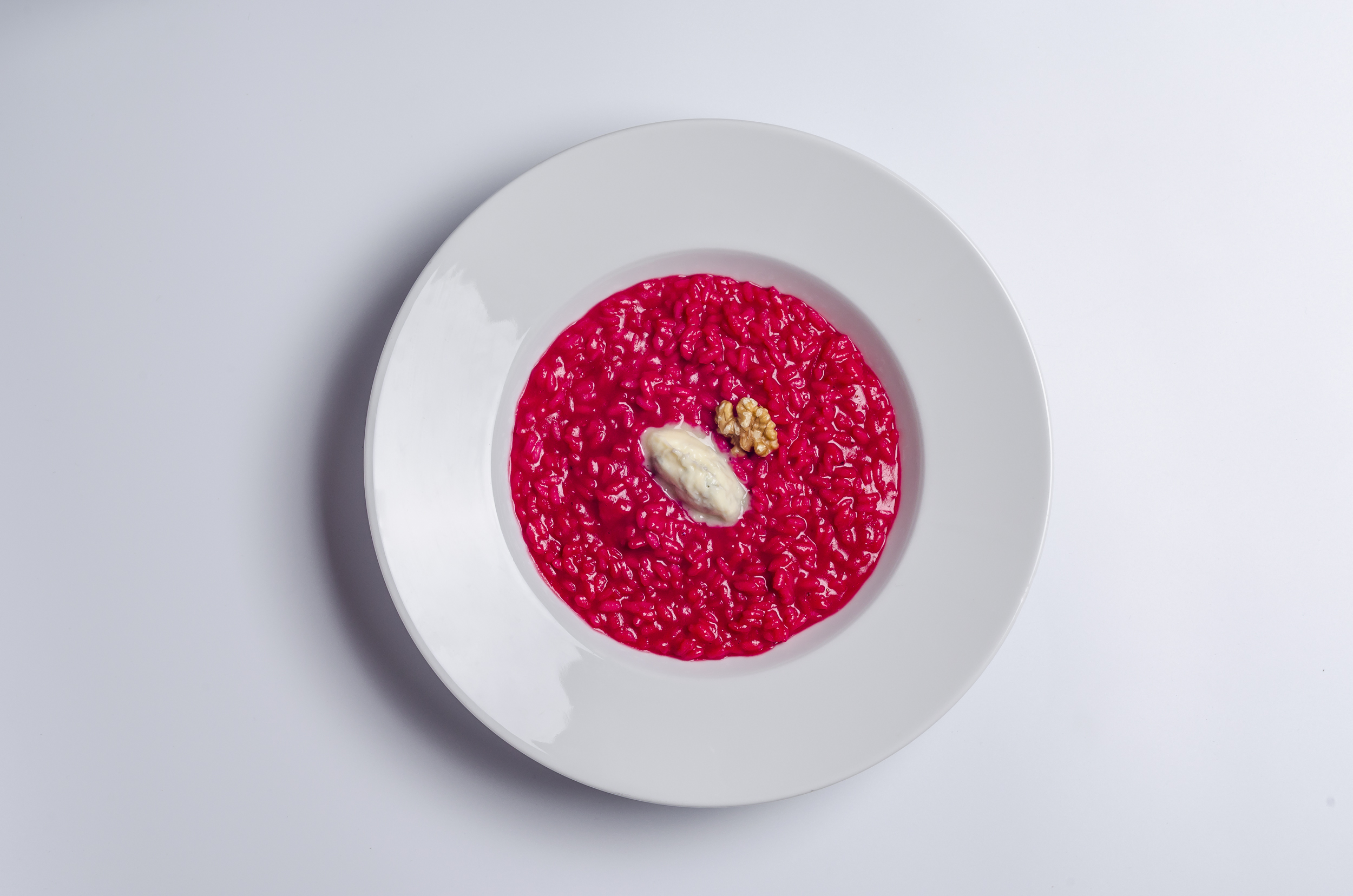
A Colonia, anni dopo, un servizio fotografico per il lancio del ristorante La Toscana costruì intorno al riso una piccola memoria visiva. Da lì, per un periodo, fui ricordato anche attraverso quei piatti: riso, risotti, forme bianche, superfici cremose, chicchi lucidi, fotografie. Non era un titolo ufficiale. Era una percezione. Ma a volte una percezione racconta bene un mestiere.
Rice Oryza sativa — my way!
This page comes from a very old text in my archive, published on the website between 2008 and 2009. Back then it was called Il Riso a modo mio. I keep it alive today not as nostalgia, but as a working trace: rice is one of the ingredients through which I learned to think about cooking, absorption, starch, resting, shape and service.
Years later in Cologne, a photo shoot for the launch of the restaurant La Toscana created a small visual memory around rice. For a while, people partly remembered my work through those dishes: rice, risotti, white forms, creamy surfaces, glossy grains, photographs. It was not an official title. It was a perception. But sometimes perception tells a craft quite well.
Reis Oryza sativa — auf meine Art!
Diese Seite stammt aus einem sehr alten Text meines Archivs, veröffentlicht auf der Website zwischen 2008 und 2009. Damals hieß sie Il Riso a modo mio. Heute bleibt sie nicht aus Nostalgie bestehen, sondern als Arbeitsspur: Reis war eine der Zutaten, mit denen ich über Garen, Aufnahmefähigkeit, Stärke, Ruhezeit, Form und Service nachdenken gelernt habe.
Jahre später entstand in Köln für den Start des Restaurants La Toscana eine Fotoserie rund um Reis. Eine Zeit lang wurde meine Arbeit auch über diese Gerichte erinnert: Reis, Risotti, weiße Formen, cremige Oberflächen, glänzende Körner, Fotos. Es war kein offizieller Titel. Es war eine Wahrnehmung. Aber manchmal erzählt eine Wahrnehmung ein Handwerk sehr genau.
Il riso non è neutro.
Il riso sembra docile perché è bianco, piccolo, ordinato. In realtà è una materia severa. Ogni chicco decide quanto liquido assorbire, quanto amido cedere, quanto resistere al morso e quanto collassare in crema.
Nel vecchio testo scrivevo Oryza sattiva. Oggi lo correggo: Oryza sativa. La correzione non è solo botanica. È anche un modo per dire che una pagina può invecchiare bene se viene riletta, ripulita, aggiornata e rimessa in servizio.
I risi italiani da risotto appartengono alla grande famiglia dei risi japonica: Carnaroli, Vialone Nano, Arborio, Roma, Baldo, Sant’Andrea. Non sono intercambiabili. Hanno carattere, tenuta, difetti e memoria di cottura.
Rice is not neutral.
Rice looks obedient because it is white, small and orderly. In reality it is a strict ingredient. Each grain decides how much liquid it will absorb, how much starch it will release, how much bite it will keep and how far it will collapse into cream.
In the old text I wrote Oryza sattiva. Today I correct it: Oryza sativa. The correction is not only botanical. It is also a way of saying that a page can age well if it is reread, cleaned, updated and put back to work.
Italian risotto rice belongs mainly to the broad japonica world: Carnaroli, Vialone Nano, Arborio, Roma, Baldo, Sant’Andrea. They are not interchangeable. They have character, resistance, defects and cooking memory.
Reis ist nicht neutral.
Reis wirkt gefügig, weil er weiß, klein und ordentlich aussieht. In Wirklichkeit ist er eine strenge Zutat. Jedes Korn entscheidet, wie viel Flüssigkeit es aufnimmt, wie viel Stärke es abgibt, wie viel Biss es behält und wann es in Cremigkeit zerfällt.
Im alten Text stand Oryza sattiva. Heute korrigiere ich das: Oryza sativa. Diese Korrektur ist nicht nur botanisch. Sie sagt auch: Eine Seite kann gut altern, wenn man sie neu liest, reinigt, aktualisiert und wieder in Betrieb nimmt.
Italienischer Risottoreis gehört vor allem zur großen japonica-Welt: Carnaroli, Vialone Nano, Arborio, Roma, Baldo, Sant’Andrea. Sie sind nicht austauschbar. Sie haben Charakter, Standfestigkeit, Schwächen und ein Gedächtnis beim Garen.
Il riso cotto non perdona la distrazione.
Il riso è anche una materia igienicamente delicata. Il problema non è il riso appena cotto e servito, ma il riso cotto lasciato tiepido, lento, dimenticato, poi riscaldato come se niente fosse.
In cucina professionale il riso cotto che non viene servito subito va raffreddato rapidamente in strato sottile, protetto, datato e conservato in frigorifero. Non deve attraversare lentamente ore di temperatura ambiente.
Nota pratica: il rischio legato a Bacillus cereus non si risolve con una riscaldata teatrale. Se il riso è stato gestito male prima, il problema può essere già avvenuto. Meglio piccole quantità, servizio pulito e raffreddamento veloce.
Cooked rice does not forgive distraction.
Rice is also a delicate ingredient from a food-safety point of view. The problem is not rice cooked and served immediately, but cooked rice left warm, slow, forgotten, then reheated as if nothing had happened.
In a professional kitchen, cooked rice that is not served immediately must be cooled quickly in a shallow layer, protected, dated and refrigerated. It should not spend hours drifting slowly through room temperature.
Practical note: the risk linked to Bacillus cereus is not solved by dramatic reheating. If the rice was badly handled before, the problem may already have happened. Better small batches, clean service and rapid cooling.
Gekochter Reis verzeiht keine Unachtsamkeit.
Reis ist auch hygienisch empfindlich. Das Problem ist nicht frisch gekochter und sofort servierter Reis, sondern gekochter Reis, der lauwarm stehen bleibt, vergessen wird und später behandelt wird, als sei nichts passiert.
In der professionellen Küche muss Reis, der nicht sofort serviert wird, schnell in flacher Schicht abgekühlt, abgedeckt, datiert und gekühlt gelagert werden. Er darf nicht stundenlang langsam bei Raumtemperatur stehen.
Praktische Notiz: Das Risiko durch Bacillus cereus verschwindet nicht durch starkes Wiedererhitzen. Wenn der Reis vorher falsch behandelt wurde, kann das Problem bereits entstanden sein. Besser: kleine Mengen, sauberer Service, schnelles Abkühlen.
Prima del risotto, bisogna capire il chicco.
Before risotto, understand the grain.
Vor dem Risotto muss man das Korn verstehen.
- Carnaroli
Grande tenuta, chicco importante, buona cessione di amido. Ottimo quando vuoi un risotto elegante, all’onda, con margine tecnico. - Vialone Nano
Più piccolo, più assorbente, molto adatto a risotti morbidi e territoriali. Richiede mano attenta: si muove in fretta. - Arborio e Roma
Chicchi generosi, buoni per preparazioni cremose, timballi, risi legati. Meno tolleranza se spingi troppo la cottura. - Balilla
Riso tondo, utile per dolci, minestre, ripieni, preparazioni frullate o cremose. Non deve fingere di essere un riso da risotto. - Tostatura
Serve ad asciugare la superficie e dare struttura, non a bruciare il chicco. Se senti odore di popcorn stanco, sei già oltre. - Mantecatura
Fuori fuoco, con riposo. Burro, olio, formaggio o grassi alternativi non sono decorazione: sono architettura della texture.
- Carnaroli
Excellent holding power, important grain, good starch release. Ideal for an elegant, flowing risotto with a technical safety margin. - Vialone Nano
Smaller, more absorbent, suited to soft regional risotti. It needs attention: it moves quickly. - Arborio and Roma
Generous grains, useful for creamy preparations, timbales and bound rice dishes. Less tolerance if cooking is pushed too far. - Balilla
Round rice, useful for desserts, soups, fillings and blended preparations. It should not pretend to be risotto rice. - Toasting
It dries the surface and gives structure. It is not a license to burn the grain. If it smells like tired popcorn, you have gone too far. - Finishing
Off the heat, with a short rest. Butter, oil, cheese or alternative fats are not decoration: they are texture architecture.
- Carnaroli
Sehr gute Standfestigkeit, großes Korn, gute Stärkeabgabe. Ideal für ein elegantes, cremig fließendes Risotto mit technischem Spielraum. - Vialone Nano
Kleiner, aufnahmefähiger, sehr gut für weichere regionale Risotti. Er verlangt Aufmerksamkeit: Er verändert sich schnell. - Arborio und Roma
Großzügige Körner, gut für cremige Zubereitungen, Timbales und gebundene Reisgerichte. Weniger tolerant, wenn man die Garung überzieht. - Balilla
Rundkornreis für Desserts, Suppen, Füllungen und cremige oder gemixte Zubereitungen. Er muss nicht so tun, als sei er Risottoreis. - Anrösten
Es trocknet die Oberfläche und gibt Struktur. Es bedeutet nicht, das Korn zu verbrennen. Wenn es nach müdem Popcorn riecht, bist du zu weit. - Mantecatura
Abseits der Hitze, mit kurzer Ruhezeit. Butter, Öl, Käse oder alternative Fette sind keine Dekoration: Sie bauen die Textur.
Cinque ricette, rilette senza cancellare l’origine.
Il riso può essere bevanda, ripieno, risotto, pasta farcita, dolce. Cambia la forma, ma non cambia la domanda: quanta acqua entra nel chicco e quanta memoria resta nel piatto?
Le ricette si aprono cliccando. Ho mantenuto l’impianto storico, correggendo grammatica tecnica, tempi, igiene e sequenza operativa.
Five recipes, reread without erasing their origin.
Rice can be a drink, a filling, a risotto, a stuffed pasta, a dessert. The form changes, but the question stays: how much water enters the grain, and how much memory remains in the dish?
The recipes open by clicking. I kept the historical structure while correcting technical grammar, timing, hygiene and workflow.
Fünf Rezepte, neu gelesen, ohne ihren Ursprung zu löschen.
Reis kann Getränk, Füllung, Risotto, gefüllte Pasta oder Dessert sein. Die Form ändert sich, aber die Frage bleibt: Wie viel Wasser nimmt das Korn auf, und wie viel Erinnerung bleibt im Gericht?
Die Rezepte öffnen sich per Klick. Die historische Struktur bleibt erhalten; Technik, Zeiten, Hygiene und Ablauf wurden aktualisiert.
Chicha venezuelana, bevanda fredda di risodolce / bevanda
Ingredienti
- Riso Balilla o altro riso tondo: 1 tazza, circa 180 g
- Acqua: 2 L
- Sale: 1 pizzico
- Cannella: 1 stecca
- Vaniglia: 1 stecca
- Latte condensato zuccherato: 1 lattina, circa 370 g
- Ghiaccio o latte freddo per regolare la consistenza
Procedura
- Sciacqua il riso finché l’acqua è meno torbida, poi scola bene.
- Metti riso, acqua, sale, cannella e vaniglia in casseruola.
- Cuoci a bollore dolce finché il riso è molto morbido, circa 30–35 minuti.
- Rimuovi cannella e vaniglia. Allarga il riso cotto in un contenitore basso e raffredda rapidamente.
- Frulla con latte condensato, aggiungendo acqua fredda o latte freddo fino a consistenza bevibile.
- Conserva in frigo e servi fredda. Agita o frulla di nuovo prima del servizio.
Nota sicurezza: non lasciare il riso cotto per ore a temperatura ambiente. Raffreddalo velocemente e conserva la bevanda in frigorifero.
Avocado alla colombiana con riso, pollo e Cheddarripieno / forno
Ingredienti
- Avocado maturi ma sodi: 4
- Burro: 30 g
- Cipolle piccole: 2, tritate fini
- Riso: 1 tazza, circa 180 g
- Brodo di pollo caldo: 1,5 tazze, circa 360 g
- Petto di pollo arrosto: 200 g, a dadini
- Prezzemolo tritato: 4 cucchiai
- Cheddar grattugiato: 250 g
- Uovo: 1
- Succo di limone: 1 cucchiaio
- Sale e pepe
Procedura
- Rosola la cipolla nel burro senza bruciarla.
- Aggiungi il riso, tostalo 2–3 minuti, poi bagna con brodo caldo.
- Cuoci coperto a fuoco basso per circa 16–18 minuti, finché il liquido è assorbito.
- Intiepidisci il riso. Unisci pollo, prezzemolo, metà Cheddar e uovo.
- Taglia gli avocado a metà, elimina il nocciolo e preleva parte della polpa senza rompere la buccia.
- Taglia la polpa a dadi, condiscila con limone e uniscila al riso.
- Riempi le mezze bucce, copri con Cheddar e gratina a 220°C finché il formaggio fonde e colora.
Nota tecnica: usa avocado maturi ma non molli. In forno devono restare contenitori, non diventare crema verde depressa.
Risotto con borragine, zafferano e cuori di pollorisotto / frattaglie
Ingredienti
- Riso superfino Roma o Carnaroli: 400 g
- Borragine pulita: 200 g
- Cuori di pollo: 100 g
- Provola dolce: 60 g
- Parmigiano grattugiato: 30 g
- Sedano verde: 20 g
- Cipolla: 20 g
- Brodo caldo: circa 1,5 L
- Zafferano in polvere: 0,75 g
- Pistilli di zafferano: 0,15 g
- Vino bianco: 1 bicchiere
- Olio extravergine, sale, pepe
Procedura
- Pulisci i cuori di pollo, elimina coaguli e parti dure, poi affettali sottili. Tienili freddi fino all’uso.
- Taglia la borragine a strisce e trita sedano e cipolla.
- Suda sedano e cipolla con olio. Aggiungi il riso e tosta con cura.
- Sfuma con vino bianco e lascia evaporare.
- Bagna con brodo bollente e aggiungi metà dei pistilli.
- Dopo 7 minuti aggiungi cuori di pollo, borragine, zafferano in polvere e altro brodo.
- Porta a cottura in circa 16–17 minuti dal primo brodo, mantenendo il riso all’onda.
- Fuori fuoco manteca con provola, parmigiano e pepe. Riposa 2–3 minuti.
Nota igienica: i cuori di pollo vanno puliti bene, tenuti freddi e cotti correttamente. Il romanticismo delle frattaglie non sostituisce la temperatura.
Ravioli di riso mantecato al tartufo di Norciapasta / tartufo
Ingredienti
- Farina: 200 g
- Uovo: 1
- Tuorli: 2
- Olio extravergine: 1/2 cucchiaio
- Riso Vialone Nano: 150 g
- Burro: 100 g totali
- Parmigiano: 100 g totali
- Cipolla: 1/2
- Brodo caldo q.b.
- Fondo di vitello: 12 cucchiai
- Tartufo nero di Norcia: q.b.
- Sale e pepe
Procedura
- Impasta farina, uovo, tuorli e olio. Lavora fino a ottenere una pasta liscia. Riposa 40 minuti coperta.
- Suda la cipolla con 20 g burro, sale e pepe. Tieni morbida, non colorata.
- Tosta il riso a secco, aggiungi cipolla e brodo caldo. Cuoci circa 12 minuti: deve restare molto al dente.
- Manteca con 40 g burro e 60 g parmigiano. Raffredda rapidamente in strato sottile.
- Stendi la pasta sottile. Distribuisci piccoli mucchi di riso, aggiungi tartufo a lamelle e poco tartufo grattugiato.
- Chiudi con seconda sfoglia, elimina aria e taglia i ravioli.
- Riduci il fondo di vitello e montalo con burro freddo. Controlla sale.
- Cuoci i ravioli in acqua salata, scola e servi con fondo, parmigiano e tartufo.
Nota tecnica: il riso del ripieno deve essere compatto e freddo. Se è troppo morbido, il raviolo diventa una piccola emergenza idraulica.
Riso dolce con fichi freschi e salsa di lamponidessert / vaniglia
Ingredienti
- Riso Balilla: 100 g
- Acqua: 500 g
- Zucchero: 20 g per la cottura del riso + 20 g per la meringa
- Vaniglia: 1 stecca
- Sale: 1 pizzico
- Lamponi: 200 g
- Zucchero a velo: 30 g
- Gelatina in fogli: 3–4 g
- Albume: 1
- Panna da montare: 100 g
- Fichi freschi: 7
Procedura
- Bolli acqua, zucchero, sale e vaniglia. Aggiungi il riso e cuoci 6–7 minuti.
- Scola, raffredda brevemente sotto acqua fredda e scola di nuovo con cura.
- Frulla i lamponi con zucchero a velo e passa al setaccio fine.
- Ammolla la gelatina. Prepara uno sciroppo con 20 g zucchero e poca acqua, sciogli la gelatina e versalo a filo sull’albume mentre monta.
- Continua a montare fino a raffreddamento. Monta la panna morbida.
- Condisci il riso con i semi della vaniglia. Incorpora meringa e panna senza smontare.
- Versa in stampo leggermente oleato e raffredda almeno 3 ore.
- Servi con fichi a spicchi e salsa di lamponi.
Nota tecnica: qui il riso non deve diventare pappa. Deve restare percepibile dentro una massa morbida, fredda, vanigliata.
Venezuelan chicha, cold rice drinksweet / drink
Ingredients
- Balilla or other round rice: 1 cup, about 180 g
- Water: 2 L
- Salt: 1 pinch
- Cinnamon: 1 stick
- Vanilla: 1 pod
- Sweetened condensed milk: 1 can, about 370 g
- Ice or cold milk to adjust texture
Method
- Rinse the rice until the water is less cloudy, then drain well.
- Place rice, water, salt, cinnamon and vanilla in a saucepan.
- Simmer gently until the rice is very soft, about 30–35 minutes.
- Remove cinnamon and vanilla. Spread the cooked rice in a shallow container and cool quickly.
- Blend with condensed milk, adding cold water or cold milk to reach a drinkable texture.
- Refrigerate and serve cold. Shake or blend again before service.
Safety note: do not leave cooked rice for hours at room temperature. Cool it quickly and keep the drink refrigerated.
Colombian-style avocados with rice, chicken and Cheddarstuffed / baked
Ingredients
- Ripe but firm avocados: 4
- Butter: 30 g
- Small onions: 2, finely chopped
- Rice: 1 cup, about 180 g
- Hot chicken stock: 1.5 cups, about 360 g
- Roast chicken breast: 200 g, diced
- Chopped parsley: 4 tbsp
- Grated Cheddar: 250 g
- Egg: 1
- Lemon juice: 1 tbsp
- Salt and pepper
Method
- Sweat the onion in butter without browning.
- Add rice, toast 2–3 minutes, then add hot stock.
- Cook covered over low heat for 16–18 minutes, until absorbed.
- Let the rice cool slightly. Add chicken, parsley, half the Cheddar and the egg.
- Halve the avocados, remove the stones and scoop out part of the flesh without breaking the skins.
- Dice the flesh, season with lemon and fold into the rice.
- Fill the avocado shells, cover with Cheddar and bake at 220°C until melted and lightly browned.
Technical note: use ripe but firm avocados. In the oven they must remain containers, not become sad green cream.
Risotto with borage, saffron and chicken heartsrisotto / offal
Ingredients
- Roma or Carnaroli rice: 400 g
- Clean borage: 200 g
- Chicken hearts: 100 g
- Mild provola cheese: 60 g
- Grated Parmigiano: 30 g
- Green celery: 20 g
- Onion: 20 g
- Hot stock: about 1.5 L
- Ground saffron: 0.75 g
- Saffron threads: 0.15 g
- White wine: 1 glass
- Extra virgin olive oil, salt, pepper
Method
- Clean the chicken hearts, removing clots and tough parts, then slice thinly. Keep cold until needed.
- Cut the borage into strips and chop celery and onion.
- Sweat celery and onion with oil. Add rice and toast carefully.
- Deglaze with white wine and let it evaporate.
- Add boiling stock and half the saffron threads.
- After 7 minutes add chicken hearts, borage, ground saffron and more stock.
- Cook for about 16–17 minutes from the first stock addition, keeping the rice flowing.
- Off the heat, finish with provola, Parmigiano and pepper. Rest 2–3 minutes.
Hygiene note: chicken hearts must be cleaned well, kept cold and cooked properly. Offal romance does not replace temperature.
Ravioli filled with creamy truffle rice from Norciapasta / truffle
Ingredients
- Flour: 200 g
- Egg: 1
- Egg yolks: 2
- Extra virgin olive oil: 1/2 tbsp
- Vialone Nano rice: 150 g
- Butter: 100 g total
- Parmigiano: 100 g total
- Onion: 1/2
- Hot stock as needed
- Veal jus: 12 tbsp
- Black truffle from Norcia: as needed
- Salt and pepper
Method
- Knead flour, egg, yolks and oil until smooth. Rest covered for 40 minutes.
- Sweat the onion with 20 g butter, salt and pepper. Keep soft, not browned.
- Toast the rice dry, add onion and hot stock. Cook about 12 minutes: it must remain very al dente.
- Finish with 40 g butter and 60 g Parmigiano. Cool quickly in a shallow layer.
- Roll the pasta thinly. Place small mounds of rice, adding truffle slices and a little grated truffle.
- Cover with a second sheet, remove air and cut the ravioli.
- Reduce the veal jus and mount it with cold butter. Check seasoning.
- Cook ravioli in salted water, drain and serve with jus, Parmigiano and truffle.
Technical note: the rice filling must be compact and cold. If it is too soft, the raviolo becomes a small hydraulic emergency.
Sweet rice with fresh figs and raspberry saucedessert / vanilla
Ingredients
- Balilla rice: 100 g
- Water: 500 g
- Sugar: 20 g for rice cooking + 20 g for meringue
- Vanilla: 1 pod
- Salt: 1 pinch
- Raspberries: 200 g
- Icing sugar: 30 g
- Gelatine leaves: 3–4 g
- Egg white: 1
- Whipping cream: 100 g
- Fresh figs: 7
Method
- Boil water, sugar, salt and vanilla. Add rice and cook 6–7 minutes.
- Drain, cool briefly under cold water and drain again very well.
- Blend raspberries with icing sugar and pass through a fine sieve.
- Soak gelatine. Make a syrup with 20 g sugar and a little water, dissolve the gelatine and pour it into the egg white while whipping.
- Continue whipping until cool. Whip the cream softly.
- Season rice with vanilla seeds. Fold in meringue and cream gently.
- Pour into a lightly oiled mould and chill at least 3 hours.
- Serve with fig wedges and raspberry sauce.
Technical note: the rice should not become porridge. It should remain perceptible inside a soft, cold, vanilla-scented mass.
Venezolanische Chicha, kaltes Reisgetränksüß / Getränk
Zutaten
- Balilla oder anderer Rundkornreis: 1 Tasse, ca. 180 g
- Wasser: 2 L
- Salz: 1 Prise
- Zimt: 1 Stange
- Vanille: 1 Schote
- Gezuckerte Kondensmilch: 1 Dose, ca. 370 g
- Eis oder kalte Milch zum Einstellen der Konsistenz
Zubereitung
- Reis waschen, bis das Wasser weniger trüb ist, dann gut abtropfen lassen.
- Reis, Wasser, Salz, Zimt und Vanille in einen Topf geben.
- Sanft köcheln, bis der Reis sehr weich ist, etwa 30–35 Minuten.
- Zimt und Vanille entfernen. Den gekochten Reis in einem flachen Behälter schnell abkühlen.
- Mit Kondensmilch mixen und mit kaltem Wasser oder kalter Milch trinkbar einstellen.
- Im Kühlschrank lagern und kalt servieren. Vor dem Service schütteln oder erneut kurz mixen.
Sicherheit: Gekochten Reis nicht stundenlang bei Raumtemperatur stehen lassen. Schnell abkühlen und das Getränk gekühlt lagern.
Avocados nach kolumbianischer Art mit Reis, Huhn und Cheddargefüllt / Ofen
Zutaten
- Reife, aber feste Avocados: 4
- Butter: 30 g
- Kleine Zwiebeln: 2, fein gehackt
- Reis: 1 Tasse, ca. 180 g
- Heiße Hühnerbrühe: 1,5 Tassen, ca. 360 g
- Gebratene Hühnerbrust: 200 g, gewürfelt
- Gehackte Petersilie: 4 EL
- Geriebener Cheddar: 250 g
- Ei: 1
- Zitronensaft: 1 EL
- Salz und Pfeffer
Zubereitung
- Zwiebel in Butter anschwitzen, ohne sie zu bräunen.
- Reis zugeben, 2–3 Minuten anrösten, dann heiße Brühe zugeben.
- Zugedeckt bei niedriger Hitze 16–18 Minuten garen, bis die Flüssigkeit aufgenommen ist.
- Reis leicht abkühlen lassen. Huhn, Petersilie, die Hälfte Cheddar und Ei zugeben.
- Avocados halbieren, Kern entfernen und etwas Fruchtfleisch herauslösen, ohne die Schale zu beschädigen.
- Fruchtfleisch würfeln, mit Zitrone würzen und unter den Reis heben.
- Avocadoschalen füllen, mit Cheddar bedecken und bei 220°C gratinieren, bis der Käse schmilzt und leicht bräunt.
Technische Notiz: Die Avocados sollen reif, aber fest sein. Im Ofen müssen sie Behälter bleiben, nicht zu trauriger grüner Creme werden.
Risotto mit Borretsch, Safran und HühnerherzenRisotto / Innereien
Zutaten
- Roma- oder Carnaroli-Reis: 400 g
- Geputzter Borretsch: 200 g
- Hühnerherzen: 100 g
- Milde Provola: 60 g
- Geriebener Parmigiano: 30 g
- Grüner Sellerie: 20 g
- Zwiebel: 20 g
- Heiße Brühe: ca. 1,5 L
- Gemahlener Safran: 0,75 g
- Safranfäden: 0,15 g
- Weißwein: 1 Glas
- Olivenöl extra vergine, Salz, Pfeffer
Zubereitung
- Hühnerherzen putzen, Blutreste und harte Teile entfernen, dann dünn schneiden. Bis zur Verwendung kalt halten.
- Borretsch in Streifen schneiden, Sellerie und Zwiebel fein hacken.
- Sellerie und Zwiebel in Öl anschwitzen. Reis zugeben und sorgfältig anrösten.
- Mit Weißwein ablöschen und verdampfen lassen.
- Mit kochender Brühe angießen und die Hälfte der Safranfäden zugeben.
- Nach 7 Minuten Hühnerherzen, Borretsch, gemahlenen Safran und weitere Brühe zugeben.
- In etwa 16–17 Minuten ab der ersten Brühezugabe cremig fließend garen.
- Abseits der Hitze mit Provola, Parmigiano und Pfeffer fertigstellen. 2–3 Minuten ruhen lassen.
Hygiene: Hühnerherzen gut putzen, kalt halten und korrekt garen. Die Romantik der Innereien ersetzt keine Temperatur.
Ravioli mit cremigem Reis und schwarzem Trüffel aus NorciaPasta / Trüffel
Zutaten
- Mehl: 200 g
- Ei: 1
- Eigelb: 2
- Olivenöl extra vergine: 1/2 EL
- Vialone Nano Reis: 150 g
- Butter: insgesamt 100 g
- Parmigiano: insgesamt 100 g
- Zwiebel: 1/2
- Heiße Brühe nach Bedarf
- Kalbsjus: 12 EL
- Schwarzer Trüffel aus Norcia: nach Bedarf
- Salz und Pfeffer
Zubereitung
- Mehl, Ei, Eigelb und Öl zu einem glatten Teig kneten. Abgedeckt 40 Minuten ruhen lassen.
- Zwiebel mit 20 g Butter, Salz und Pfeffer weich anschwitzen, nicht bräunen.
- Reis trocken anrösten, Zwiebel und heiße Brühe zugeben. Etwa 12 Minuten garen: Er muss sehr al dente bleiben.
- Mit 40 g Butter und 60 g Parmigiano fertigstellen. Schnell in flacher Schicht abkühlen.
- Pastateig dünn ausrollen. Kleine Reishäufchen aufsetzen, Trüffelscheiben und etwas geriebenen Trüffel zugeben.
- Mit zweiter Teigbahn bedecken, Luft herausdrücken und Ravioli schneiden.
- Kalbsjus reduzieren und mit kalter Butter montieren. Abschmecken.
- Ravioli in Salzwasser garen, abtropfen und mit Jus, Parmigiano und Trüffel servieren.
Technische Notiz: Die Reisfüllung muss kompakt und kalt sein. Ist sie zu weich, wird der Raviolo zum kleinen hydraulischen Notfall.
Süßer Reis mit frischen Feigen und HimbeersauceDessert / Vanille
Zutaten
- Balilla-Reis: 100 g
- Wasser: 500 g
- Zucker: 20 g für den Reis + 20 g für die Meringue
- Vanille: 1 Schote
- Salz: 1 Prise
- Himbeeren: 200 g
- Puderzucker: 30 g
- Gelatineblätter: 3–4 g
- Eiweiß: 1
- Sahne: 100 g
- Frische Feigen: 7
Zubereitung
- Wasser, Zucker, Salz und Vanille aufkochen. Reis zugeben und 6–7 Minuten garen.
- Abgießen, kurz kalt abspülen und erneut sehr gut abtropfen lassen.
- Himbeeren mit Puderzucker mixen und durch ein feines Sieb streichen.
- Gelatine einweichen. Aus 20 g Zucker und wenig Wasser einen Sirup kochen, Gelatine darin lösen und unter Schlagen zum Eiweiß geben.
- Weiter schlagen, bis die Masse abgekühlt ist. Sahne weich schlagen.
- Reis mit Vanillesamen aromatisieren. Meringue und Sahne vorsichtig unterheben.
- In eine leicht geölte Form füllen und mindestens 3 Stunden kühlen.
- Mit Feigenspalten und Himbeersauce servieren.
Technische Notiz: Der Reis darf kein Brei werden. Er soll in einer weichen, kalten, vanilligen Masse noch spürbar bleiben.
7 punti chiave.
- Nome corretto: Oryza sativa, non sattiva.
- Non un solo riso: scegli il chicco in base alla tecnica, non all’abitudine.
- Risotto: tostatura, brodo caldo, movimento controllato, mantecatura fuori fuoco.
- Dolci: riso tondo, cottura breve o molto morbida secondo funzione.
- Ripieni: riso al dente, raffreddato, compatto.
- Servizio: il riso cotto va gestito con tempi rapidi e freddo serio.
- Memoria: una vecchia pagina può diventare archivio tecnico, non museo polveroso.
Una pagina riletta, non restaurata.
Questo testo nasce da un archivio professionale precedente e viene aggiornato oggi con uno sguardo più tecnico: varietà di riso, cottura, servizio, sicurezza alimentare e memoria culinaria.
L’obiettivo non è conservare una pagina vecchia così com’era, ma renderla ancora utile, leggibile e coerente con il lavoro attuale.
7 key points.
- Correct name: Oryza sativa, not sattiva.
- Not one rice: choose the grain according to technique, not habit.
- Risotto: toasting, hot stock, controlled movement, finishing off the heat.
- Desserts: round rice, briefly cooked or very soft according to function.
- Fillings: al dente rice, cooled, compact.
- Service: cooked rice needs fast timing and serious refrigeration.
- Memory: an old page can become a technical archive, not a dusty museum.
A page reread, not simply restored.
This text comes from an earlier professional archive and is updated today with a more technical eye: rice varieties, cooking, service, food safety and culinary memory.
The aim is not to preserve an old page exactly as it was, but to make it useful, readable and consistent with the current work.
7 Schlüsselpunkte.
- Korrekter Name: Oryza sativa, nicht sattiva.
- Nicht ein einziger Reis: Das Korn nach Technik wählen, nicht nach Gewohnheit.
- Risotto: Anrösten, heiße Brühe, kontrollierte Bewegung, Fertigstellung abseits der Hitze.
- Desserts: Rundkornreis, kurz gegart oder sehr weich, je nach Funktion.
- Füllungen: al dente gegarter Reis, abgekühlt, kompakt.
- Service: Gekochter Reis braucht schnelle Abläufe und ernsthafte Kühlung.
- Erinnerung: Eine alte Seite kann technisches Archiv werden, kein staubiges Museum.
Eine Seite neu gelesen, nicht einfach restauriert.
Dieser Text stammt aus einem früheren beruflichen Archiv und wird heute mit einem technischeren Blick aktualisiert: Reissorten, Garung, Service, Lebensmittelsicherheit und kulinarische Erinnerung.
Ziel ist nicht, eine alte Seite unverändert zu bewahren, sondern sie nützlich, lesbar und mit der heutigen Arbeit stimmig zu machen.
Altre pagine utili
Riso, ricette, menu, archivio tecnico e consulenza gastronomica.
Se lavori su un ristorante, un hotel, un evento, un contenuto culinario o una carta stagionale e vuoi rendere più precisa la parte tecnica, possiamo parlarne.